
Build a Camp You’ll Want to Stay In
Essential Gear for Jeep, SUV, and Car Camping
Introduction
A well-built vehicle-camping setup can be a little life-changing. As more people work remotely, spend longer on the road, and look for better ways to get outside, the goal is not just to get through a night at camp. It is to create a system that feels ready to support the way you actually live.
Think of your essential camp setup as if you were planning to stay for a full week or longer. Your shelter, sleep system, power, kitchen, storage, and comfort gear should work together the same way every time you leave home. Whether you are out for two nights or a full month, the system itself should not change.
What changes is the consumable stuff: food, water, and fuel.
When the core setup stays consistent, camp becomes faster to build, easier to use, and far more comfortable. You spend less time wondering what you forgot and more time working remotely, cooking a good meal, exploring a new place, or simply enjoying the quiet.
Start with a simple camp system
The fastest way to make camp easier is to pack in zones. Instead of loading loose equipment wherever it fits, build a repeatable system:
A kitchen tub for cookware, utensils, fuel, and cleanup supplies
A sleep tub for bedding, pillows, and nighttime gear
A dry-food bin for snacks, coffee, seasonings, condiments, and pantry items
A power bag for laptop, charging cables, lights, batteries, and accessories
When you arrive, pull out the kitchen tub to cook. Pull out the sleep system when it is time to wind down. Keep food separate so you are not digging through recovery gear for salt, hot sauce, or coffee at sunset.
That organization is what turns a packed vehicle into a usable camp.
Shelter: make it instant and easy
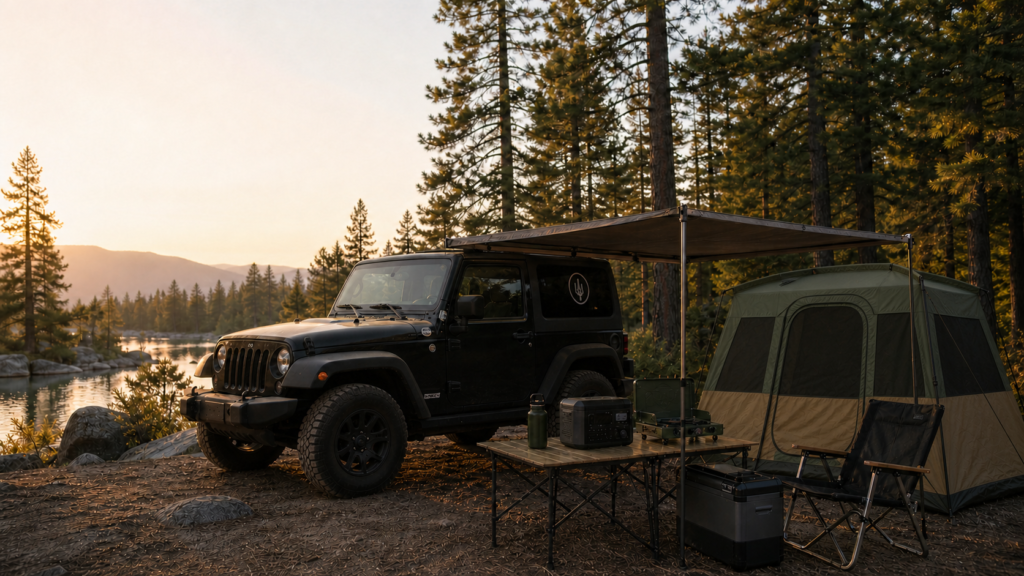
A hub tent should feel like an easy upgrade, not a complicated project. The FanttikOutdoor Alpha C4 Ultra Camping Tent, Naturehike Village Instant Tent (4-Person), and Gazelle T4 are examples of instant-style shelters that can give you a comfortable basecamp without a long setup.
For solo travelers, a hub tent is more than a sleeping area. It can become a dedicated workspace, a changing room, a place to read, and a welcome retreat from wind, rain, heat, or cold. It also gives you defined zones for sleeping and gear storage, which makes camp feel calmer and more livable.
Pair the tent with a vehicle-mounted awning. A simple pull-out side awning gives your kitchen shade and light weather protection; a 270-degree awning creates a larger outdoor room around the vehicle. You don’t have to break the budget, suction cups and a large waterproof tarp can suffice. Add a stable roll-top aluminum camp table—such as the Dometic GO Compact Camp Table—and you have a place to cook, eat, work, and play.
Hub tent or sleeping in your Jeep?
Sleeping in the back of your Jeep or SUV has one major advantage: speed. It is a great option for late arrivals, early starts, quick overnights, and lower-profile travel. Park, level the vehicle, make the bed, and you are ready.
A hub tent is the better choice when you want a true basecamp. It creates a place to work, change clothes, manage gear, and escape the weather. The most flexible travelers use both approaches: the tent for longer stays and the vehicle for quick-moving nights on the road.
Sleep well: fitted air mattress or cot
A vehicle-specific fitted air mattress is easy to store and can work inside a Jeep, SUV, or hub tent. It is a practical choice when space matters and you want a quick setup.
A folding cot adds elevation and comfort. It keeps you off uneven ground, makes it easier to get in and out of bed, and helps reduce the chill that can come from direct contact with the floor. Add a sleeping pad, warm bedding, a good pillow, and a fitted sheet over the air mattress or cot setup to make camp feel far more like home.
Power, cooling, and keeping food fresh
A portable power station, such as the BLUETTI AC50B, can support remote work, camera charging, drone batteries, lights, and other compatible essentials. It also makes it possible to run a 12V refrigerator instead of relying on ice and water.
For two or three people, a dual-zone refrigerator is worth considering if you camp often. BougeRV and Euhomy offer value-focused options; ICECO is a premium investment; and VEVOR can suit a more budget-conscious build. The point is to buy enough capacity once, rather than immediately outgrowing a fridge that cannot hold real food for your group.
A plug-in refrigerator keeps ingredients dry, organized, and ready to cook. No melted ice. No soggy food. No digging through a cooler full of water.
For temperature management, plan around your space and power setup. A compact heater like the Mr. Heater Buddy may be useful in appropriate, well-ventilated conditions; always follow the manufacturer’s instructions, never leave it unattended, and never operate it while sleeping or in an unventilated tent or vehicle. For cooling, a compact unit such as the EcoFlow WAVE 2 may fit some vehicle-camping setups, but confirm its power, ventilation, and space needs before committing.
Build a kitchen you want to use
Your camp kitchen does not need to be complicated, but it should make you excited to cook.
For simple mornings and quick meals, a Jetboil Flash is hard to beat for coffee water, oatmeal, noodles, and dehydrated meals. Pair it with an AeroPress Go, and coffee at camp becomes a small ritual rather than an afterthought.
When you want to cook real meals, the Jetboil Genesis Basecamp System is a meaningful upgrade. It gives you more flexibility than a basic water-boiling setup, whether you are making breakfast, warming a proper dinner, or cooking for friends.
Start your kitchen tub with:
A small cast-iron skillet for breakfasts and real camp meals
A TOAKS 800–1100 ml pot or pan set
A spatula, sharp kitchen knife, and cutting board
A Quatish Portable Silverware Set
Zip-top bags for leftovers, prep, and organization
A good hand towel for cooking and a separate large camp towel for showers or swimming
Dude Wipes XL for times when there is no shower
A picnic-table cover for cleaner, more comfortable public table space
A small dustpan to keep the tent or vehicle sleeping area tidy
Keep dry food nearby, including salt, pepper, oil, coffee, and the condiments that make a meal taste like something you actually wanted to eat.
Water, cleanup, and the details that matter
A water system makes every part of camp easier: drinking, hand washing, cooking, and cleaning up. The Digury 5-Gallon Water Jug with rechargeable electric dispenser is a convenient option for a vehicle-based camp. Pair it with Dr. Bronner’s Peppermint Pure-Castile Liquid Soap for cleaning, while always following local rules for responsible disposal.
The details are what make camp feel less improvised: clean hands, a dry towel, fresh food, a real meal, and a comfortable place to sit.
Make camp entertaining—or make it quiet
Car camping is not an ultralight system. Do not overlook a comfortable folding chair just because it weighs more than a backpacking chair. A chair you enjoy sitting in makes coffee, reading, conversation, and stargazing better.
I can’t say enough about the joys of a hammock, especially one with a bug net! This can be a swinging oasis for a book, movie or just a snooze.
Your table and awning create a true outdoor living space. Use it for dinner, games, remote work, or a movie night powered by your portable station. Sometimes the goal is to unplug. Other times, the goal is simply to create a better environment. A good camp setup leaves room for both.
The Trident Travel takeaway
The best Jeep, SUV, and car-camping setup is not the one with the most gear. It is the one that helps you sleep well, cook good food, stay organized, and enjoy the place you came to see.
Overlanding has its myths, like needing the newest gear, a lift kit, or thousands of dollars to even start. You don’t. Overlanding is just about getting out there. Don’t let budget stop you. A Walmart tent, a comforter from home, and a camp stove, gas station cooler and water can be enough, especially if it gets you outside comfortably. Use what you have, upgrade for comfort as you go, and make the road your own.
Ready to build your next road-trip basecamp? Follow Notes on the Road for more gear inspiration, travel ideas, and ways to make every stop part of the adventure.