
Exploring Utah’s National Parks by RV
There are road trips, and then there’s Utah.
Not the kind where you race between destinations trying to collect photos and checkboxes. The kind where the drive itself becomes part of the experience. Where the landscape changes so dramatically every few hours that you stop asking “how much farther?” and start wondering how a place like this even exists.
Utah feels built for RV travel.
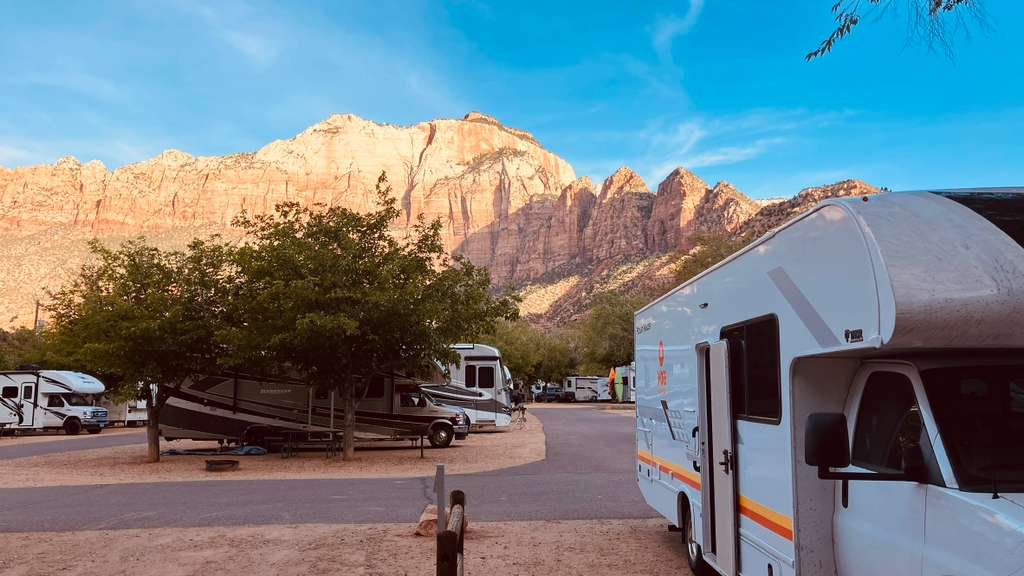
The rhythm is different out here. You wake up surrounded by cliffs that glow orange before sunrise. Coffee tastes better when your front yard is a canyon. Lunch becomes a scenic overlook without planning it. Even the long stretches of highway somehow feel cinematic, like the road itself was intentionally designed to slow you down and force you to actually look around.
What surprised me most wasn’t just the national parks. It was everything between them.
The empty roads outside Capitol Reef. Tiny desert towns with gas stations backed by massive red rock walls. Storm clouds rolling across open landscapes that seem almost too large to process. Utah constantly shifts around you, and traveling by RV lets you experience those transitions instead of skipping over them.
Zion feels energetic the second you arrive. Towering canyon walls, packed shuttle stops, hikers everywhere, people staring upward every few minutes because the scale is genuinely hard to comprehend. It’s beautiful, but it also requires strategy. RV travelers quickly learn that timing matters here. Early mornings completely change the experience. Before the crowds build, Zion feels calm and impossibly still, like the canyon is waking up slowly with the light.
Bryce Canyon feels entirely different.
Colder. Quieter. Stranger.
The hoodoos almost don’t look real at sunrise. Thousands of jagged stone formations lighting up in layers of orange and red while the morning air still feels cold enough for jackets. Bryce isn’t just about the viewpoints — it’s about the timing. Arrive too late and you miss the transformation that happens when the sun finally reaches the canyon floor.
Then there’s Capitol Reef, which somehow became one of the most memorable parts of the trip despite being the least talked about.
Less crowded. Less rushed. More space to simply exist.
This is where the RV lifestyle starts making complete sense. Scenic drives turn into the entire afternoon. Pull-offs become dinner spots. The pressure to constantly move disappears. Capitol Reef feels like the park where people finally stop trying to “do everything” and start appreciating where they actually are.
Moab shifts the energy again.
Arches and Canyonlands feel massive in completely different ways. Arches delivers those iconic formations everyone recognizes instantly, while Canyonlands feels endless — giant overlooks where conversations stop because the landscape in front of you doesn’t fully register at first. Sunset out there feels almost unreal, like the scale of the desert keeps expanding the longer you stare at it.
And somewhere during all of this, the RV stops feeling temporary.
It becomes home.
That’s the part people don’t always talk about with RV travel. The destination matters, but so does the lifestyle that develops around it. You stop unpacking and repacking. You stop feeling disconnected from the places you’re visiting. The journey becomes slower, more flexible, more immersive.
Utah rewards that approach.
Not because it’s the easiest trip — there are tunnel restrictions, campground reservations, shuttle systems, elevation changes, and long driving days — but because slowing down out here genuinely changes the experience.
Some of the best moments happened outside the parks entirely. Watching the sun drop behind desert cliffs from a campground chair. Pulling over because the light suddenly changed across the rocks. Driving through stretches of road so empty and beautiful they barely felt real.
That’s the thing about Utah by RV.
You don’t just visit it.
You move through it.