Vietnam
From Charleston to the other side of the world — and somehow, right where we needed to be.
First Impressions
Vietnam didn’t begin gently.
Getting there took nearly thirty-six hours—planes, terminals, time zones collapsing into each other until sleep lost its meaning. Somewhere over the Pacific, the idea of “tomorrow” stopped applying. By the time we landed in Ho Chi Minh City, we were carrying that particular kind of exhaustion that isn’t solved by rest.
And then Vietnam intervened.
Not abruptly. Not forcefully. Completely.
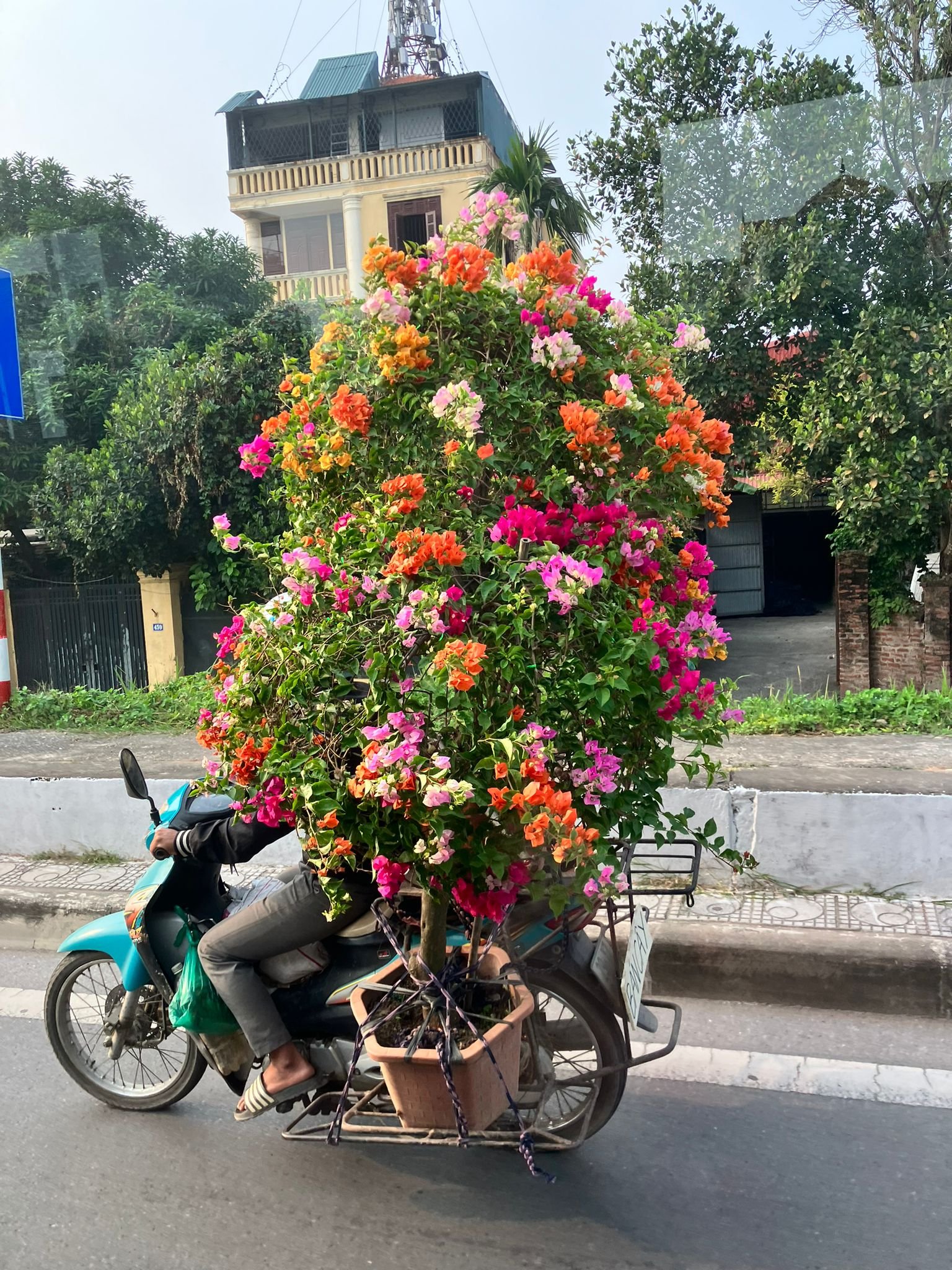
Heat, movement, voices, food, daily life unfolding at full volume—all of it arrived at once. The city didn’t wait for us to recover. It didn’t need to. Within hours, fatigue loosened its grip. Curiosity took over. Jet lag gave way to laughter. Attention snapped back into focus.
Vietnam didn’t ask us to ease in.
It reminded us how awake it’s possible to feel.
Snapshot
Route: Ho Chi Minh City → Mekong Delta → Hoi An → Hue → Hanoi → Mai Chau → Halong Bay
Travel Style: Small group, locally guided, deeply contextual
Pace: Full, but intentional — movement balanced with pause
Why Vietnam: For history that’s lived, not archived; food that becomes memory; and a country that holds chaos and calm in the same moment.
The Experience
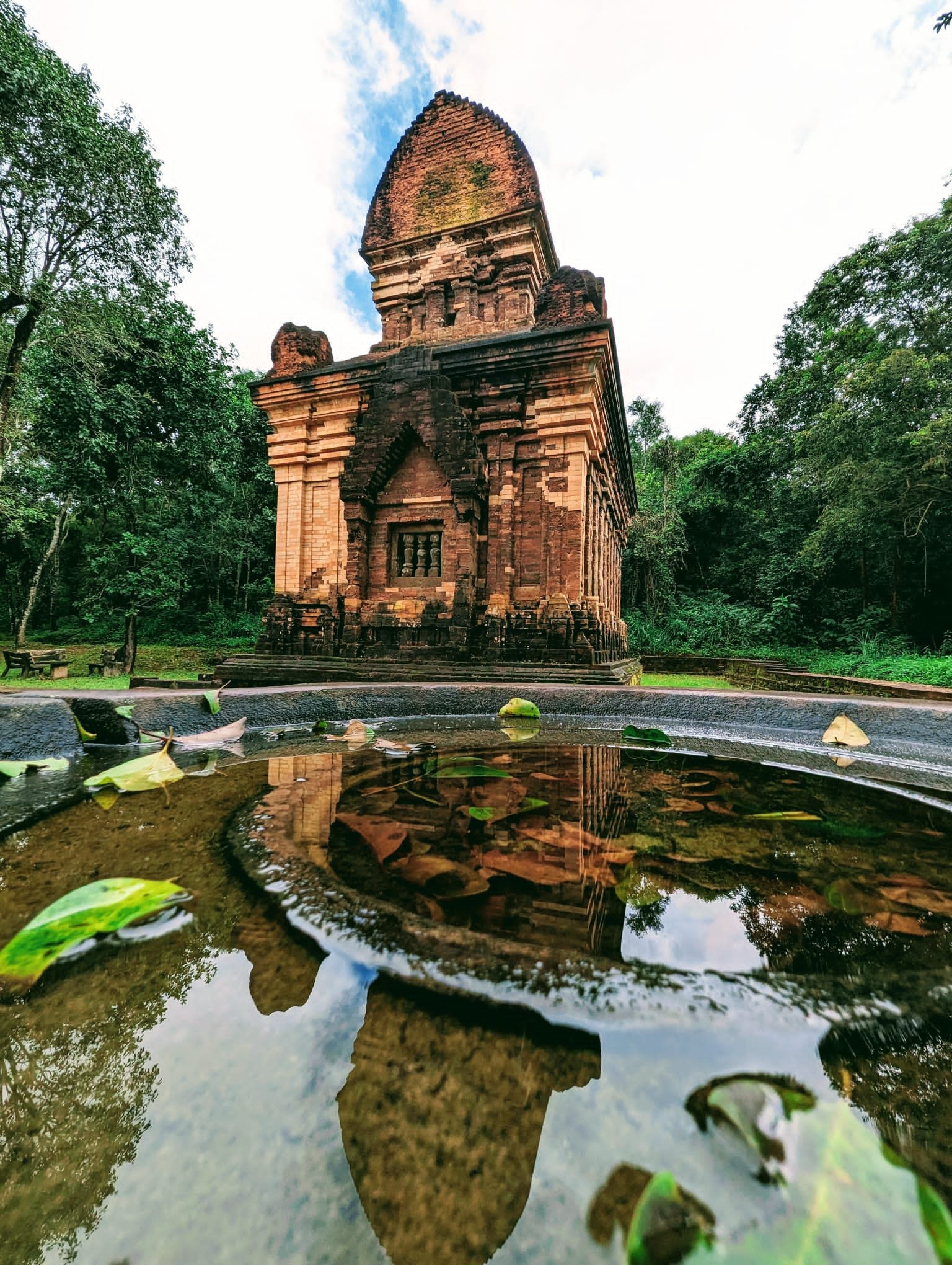
Vietnam isn’t one place—it’s many, stitched together by rivers, roads, memory, and momentum.
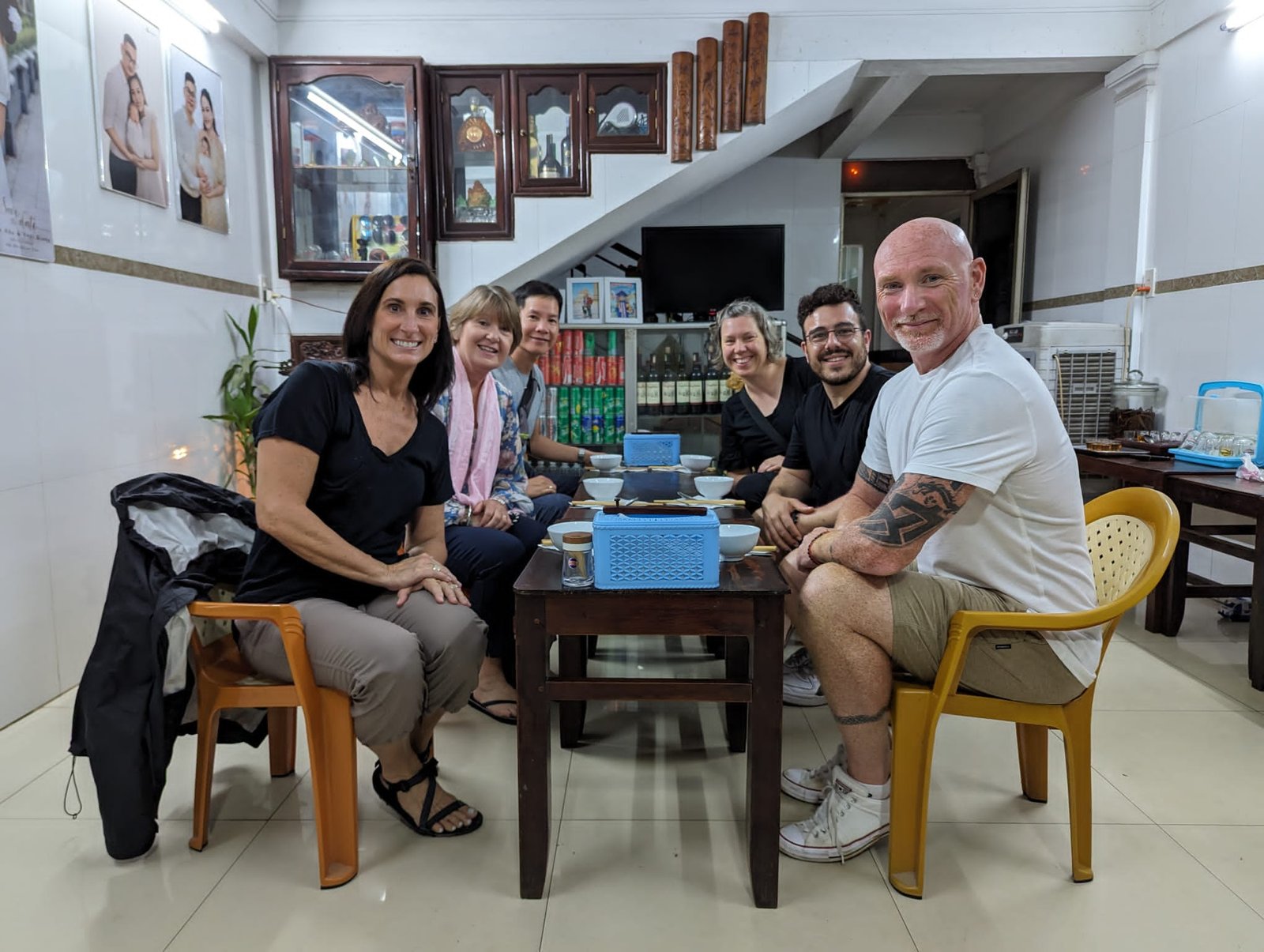
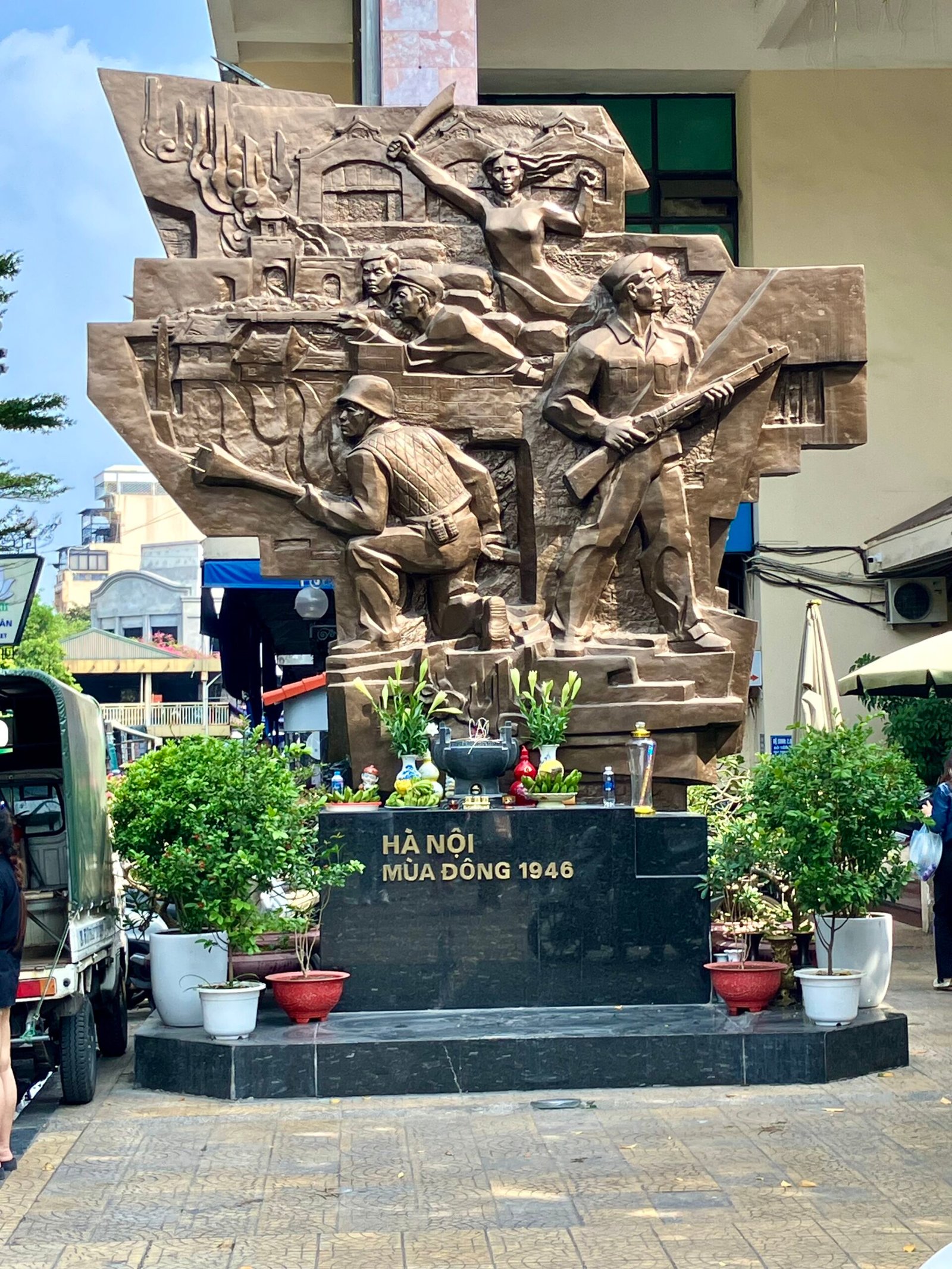
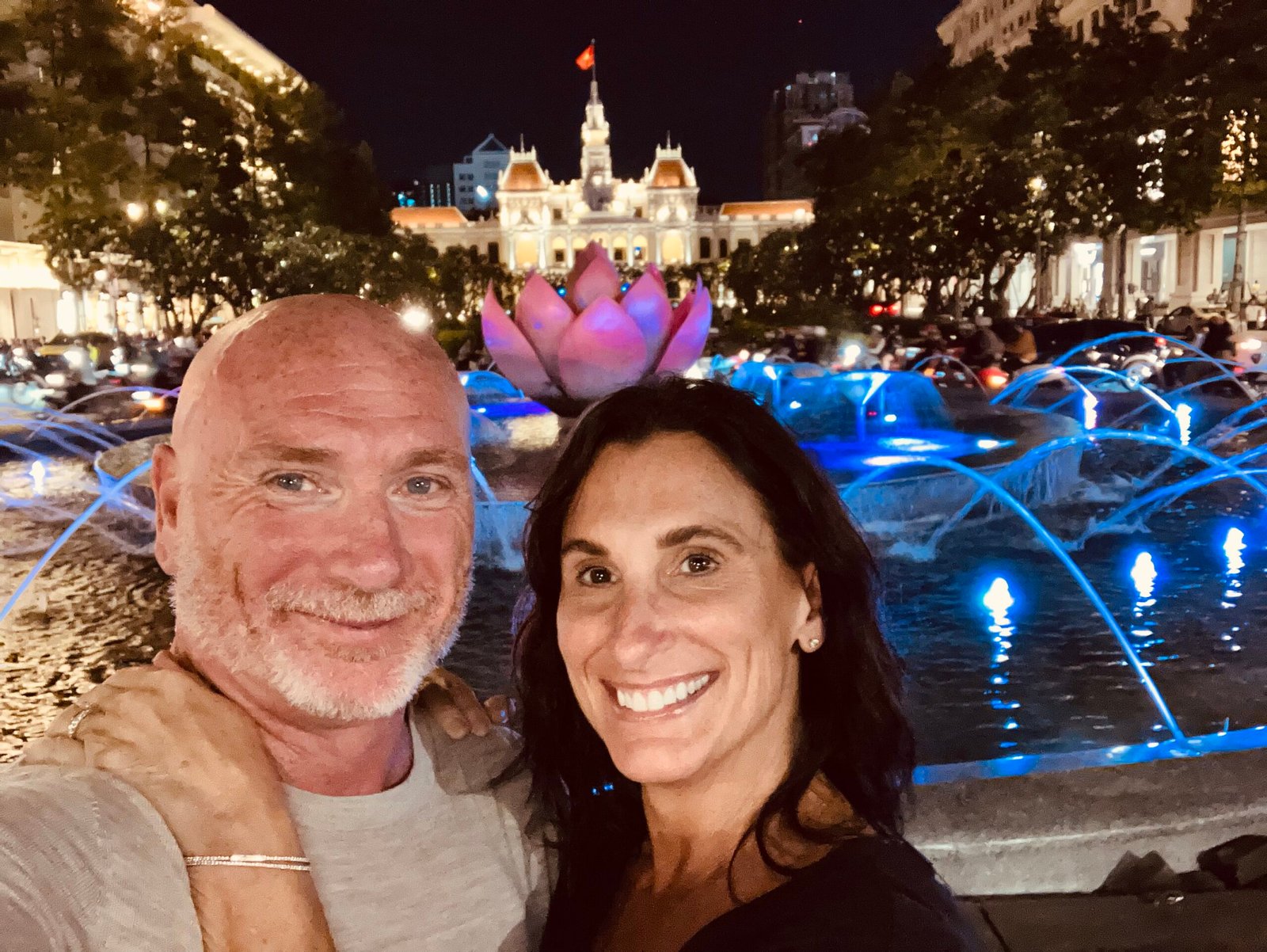
Ho Chi Minh City was our landing point and emotional jolt. Motorbikes didn’t simply move through the streets—they flowed, like water obeying rules you learn by watching. Cafés hid behind unmarked doors. History lived inside ordinary buildings. Our first dinner set the tone immediately: Vietnamese classics served inside a space that once functioned as an opium refinery in the 1800s. The contrast was impossible to ignore. Vietnam doesn’t erase its past—it absorbs it, reclaims it, and builds forward anyway.
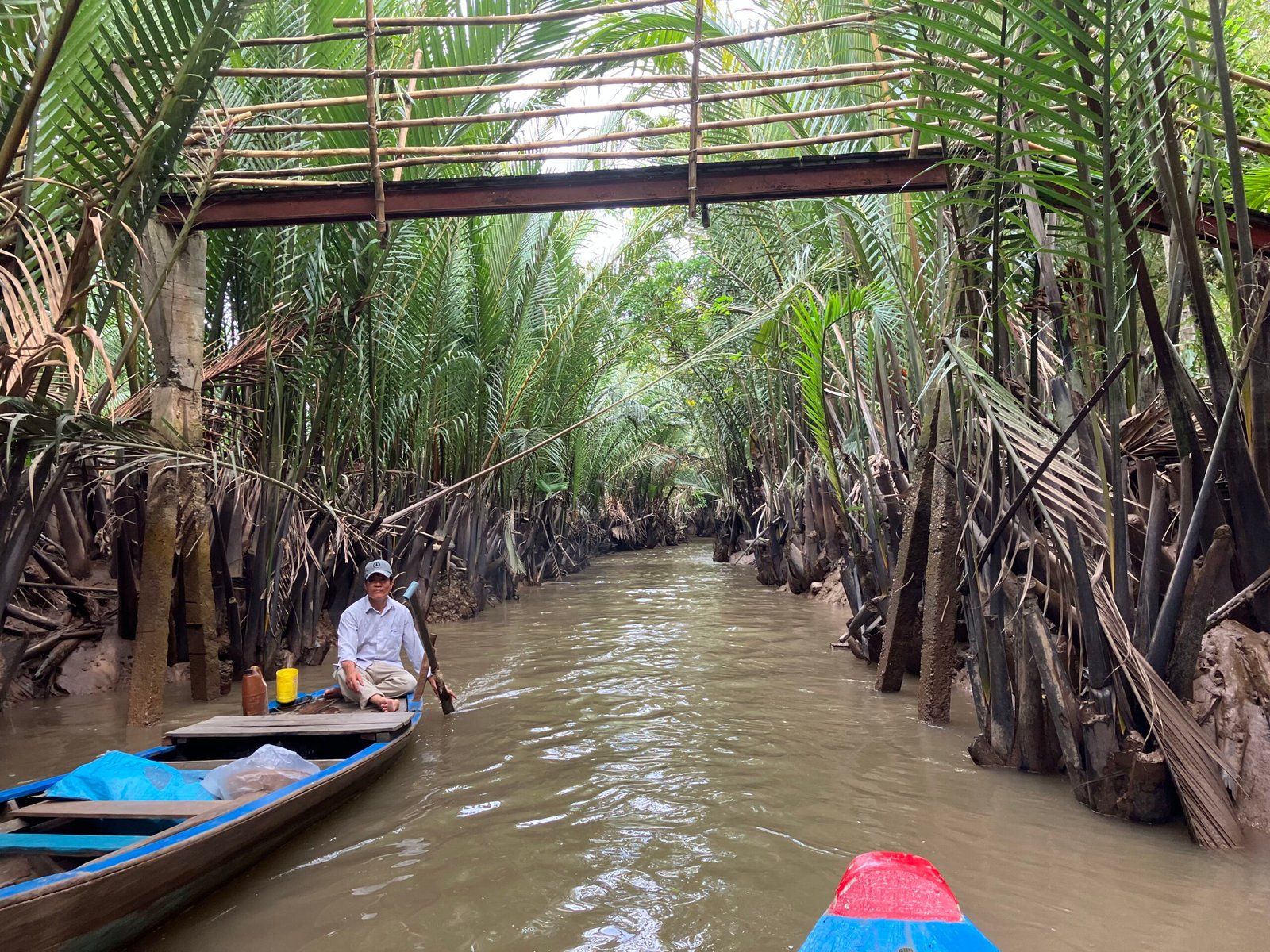
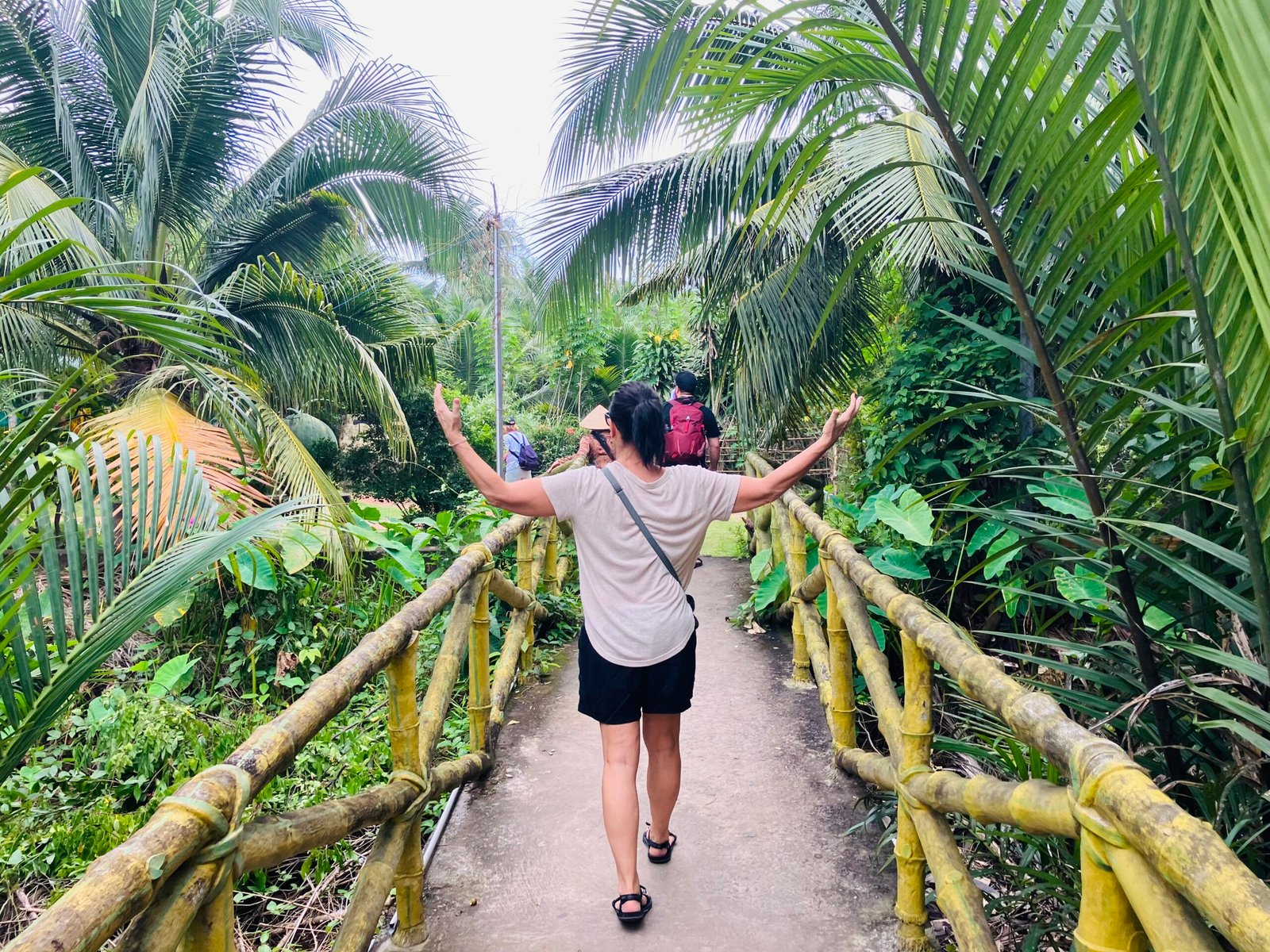
The Mekong Delta shifted everything into a slower gear. Boats replaced roads. Coconut palms replaced concrete. We moved through narrow waterways on sampans, drifting past stilt houses and families going about daily life. Lunch wasn’t rushed. Fruit was handed to us straight from trees. It felt less like sightseeing and more like being briefly folded into someone else’s rhythm.
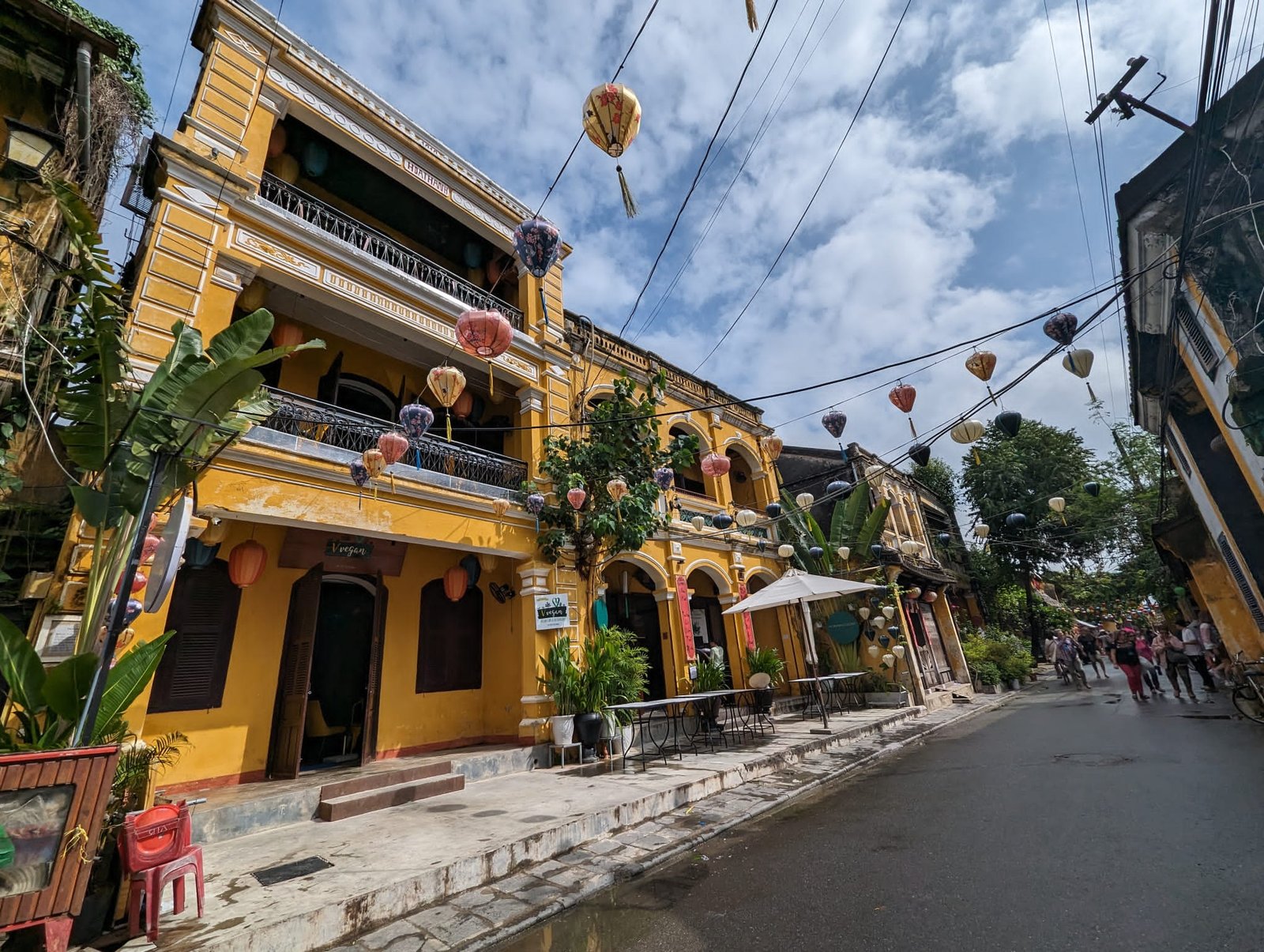
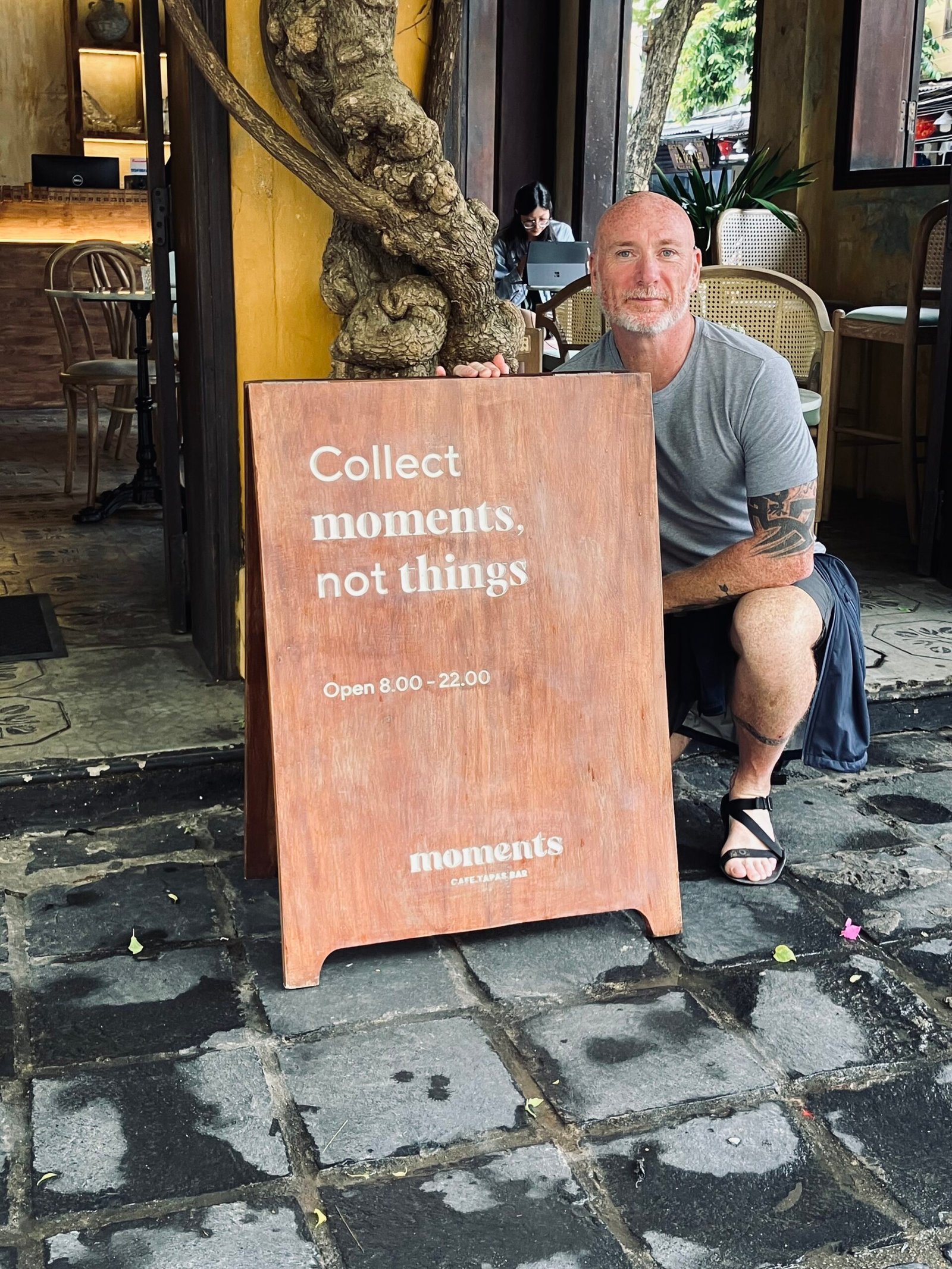
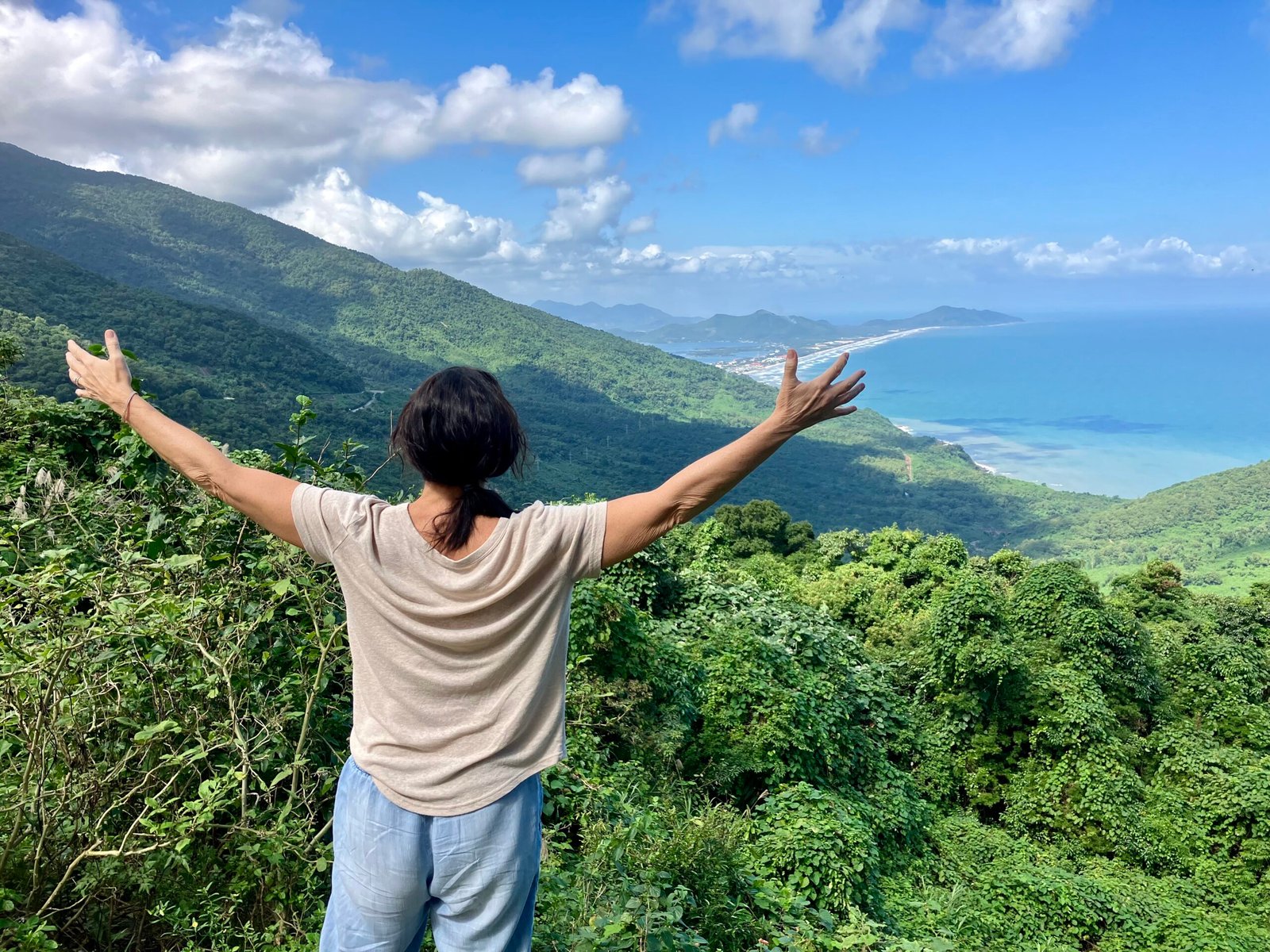
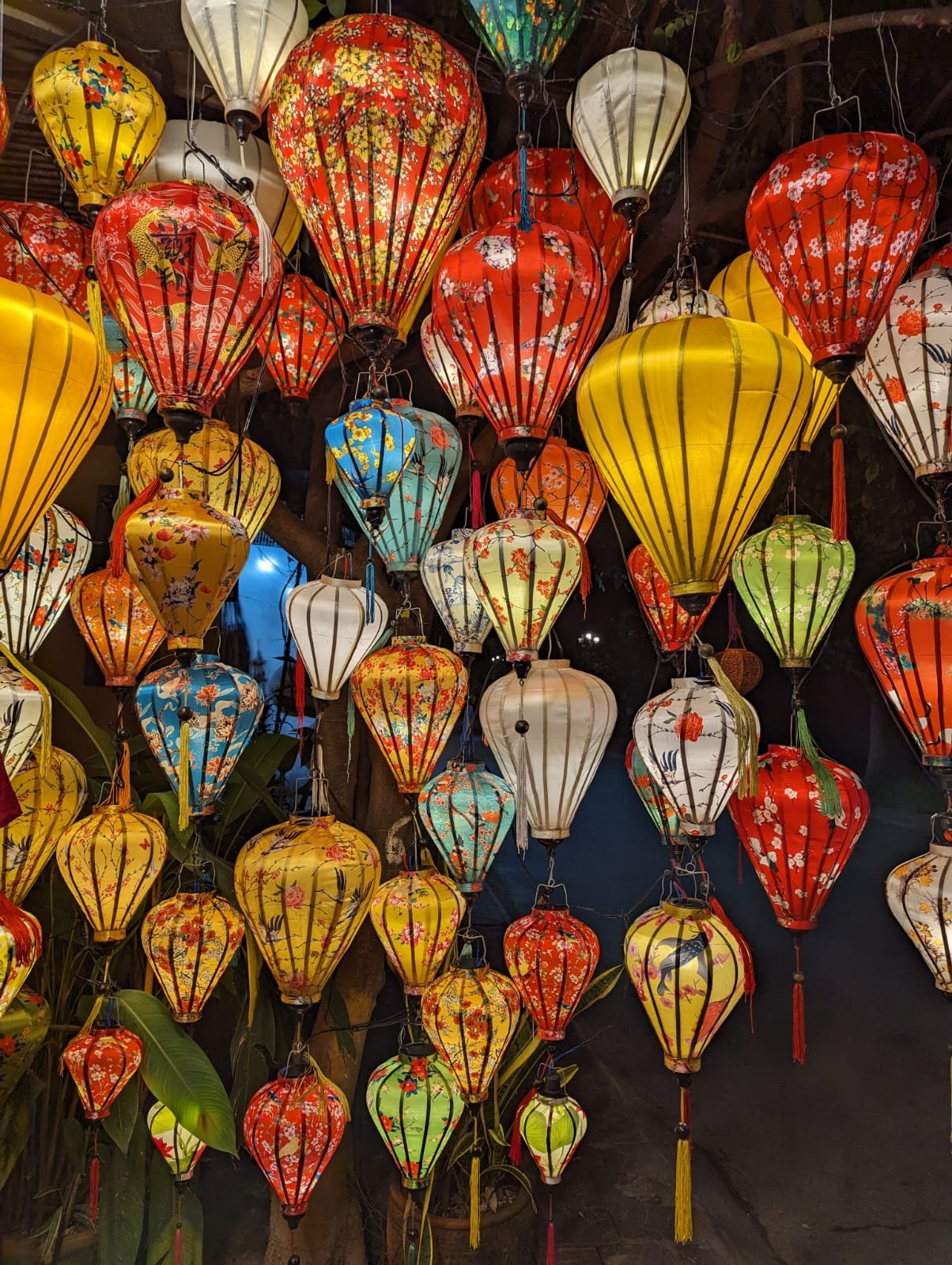
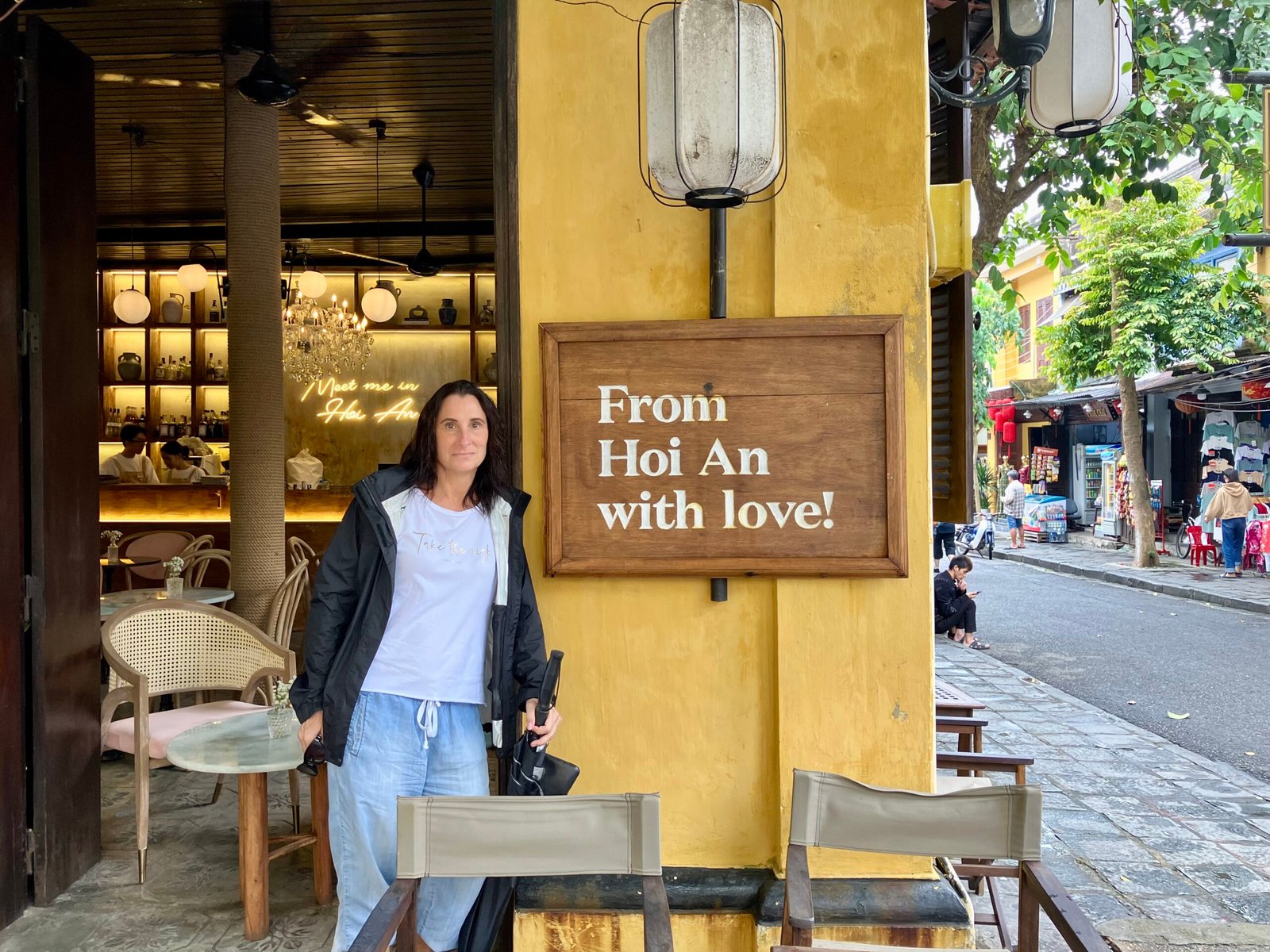
Hoi An felt like a pause button. Lantern-lit evenings, quiet mornings, streets designed for wandering rather than urgency. It was the first place we forgot what day it was—and didn’t care. But Vietnam doesn’t stay gentle for long.
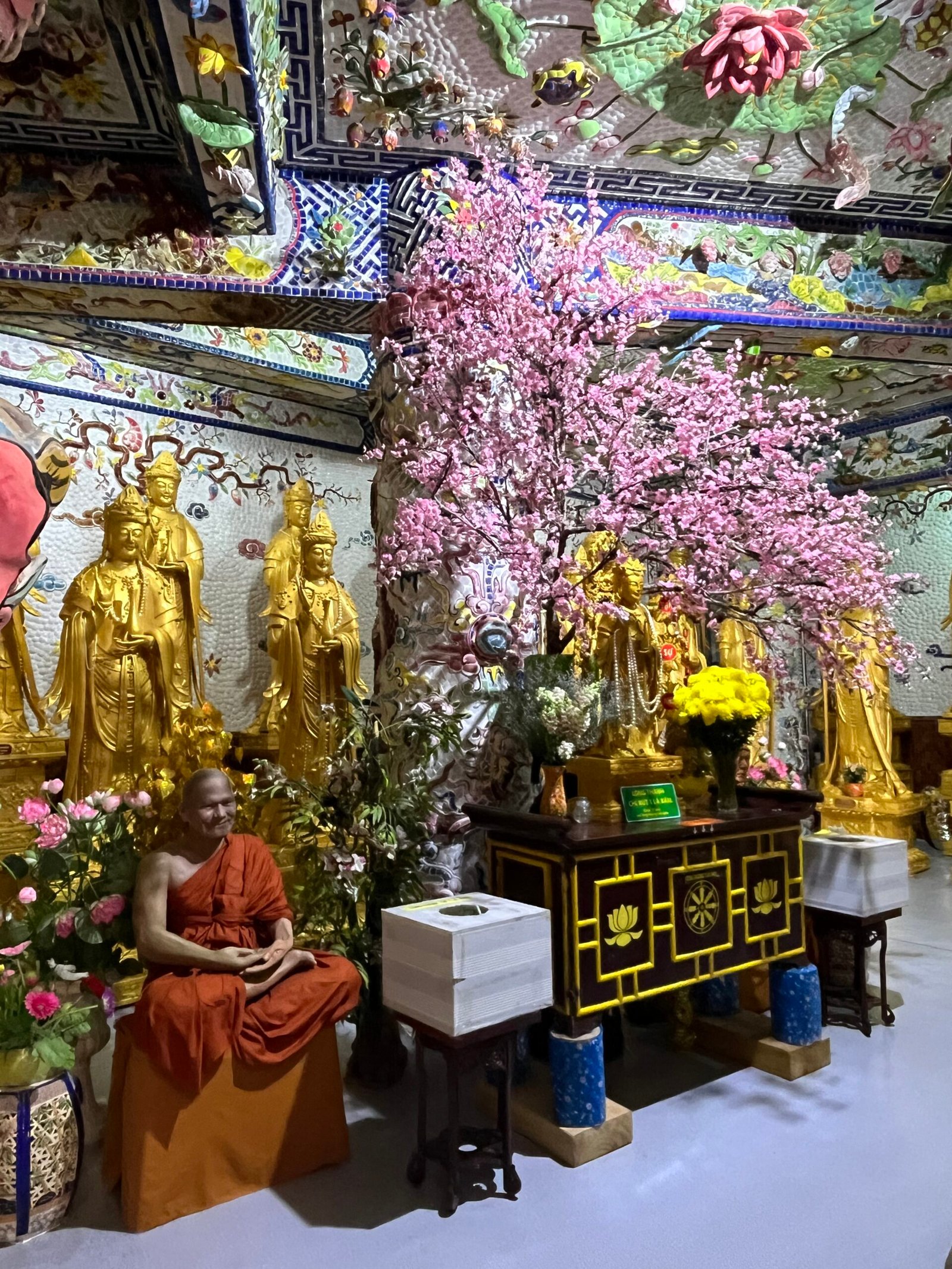
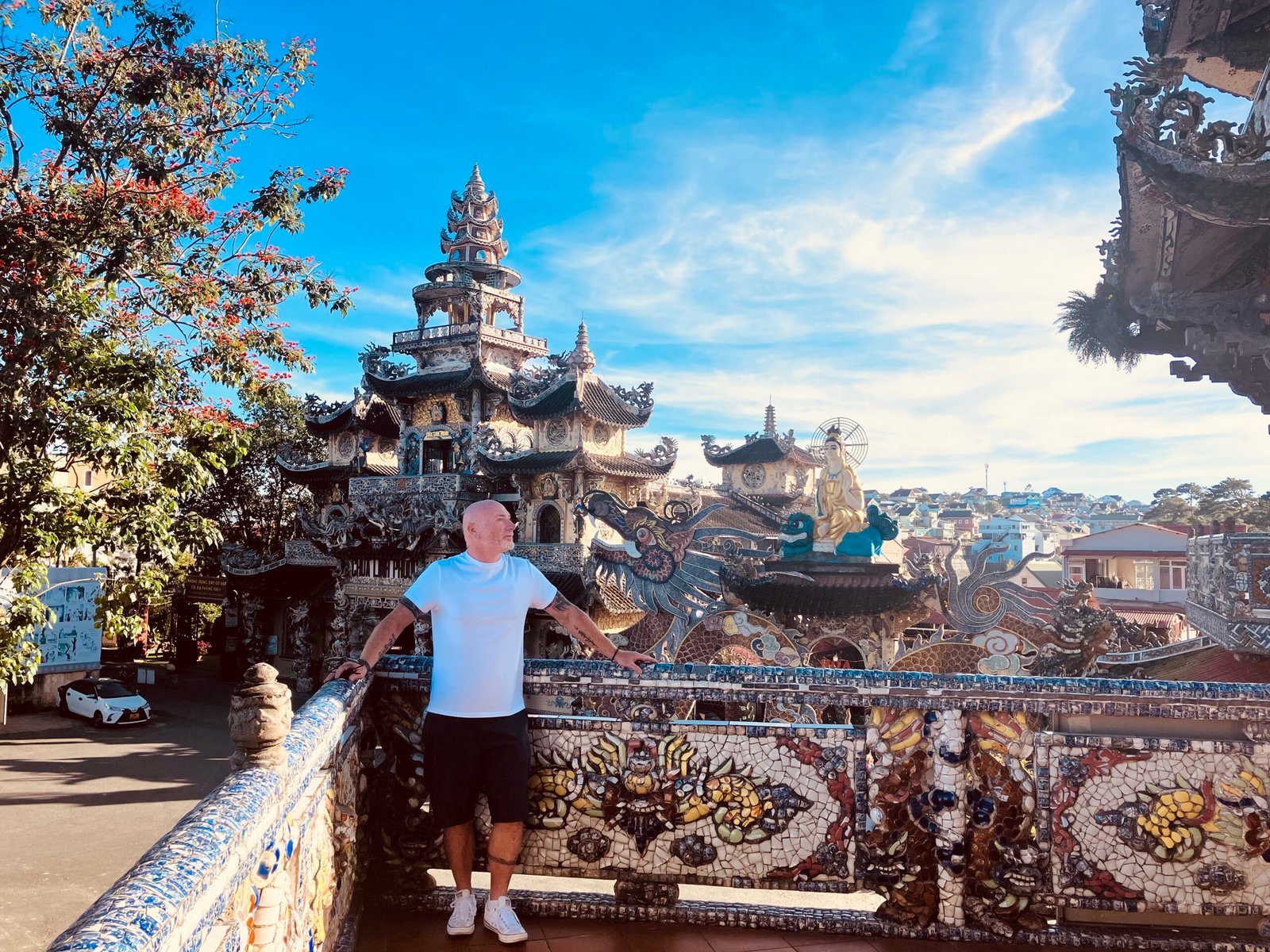
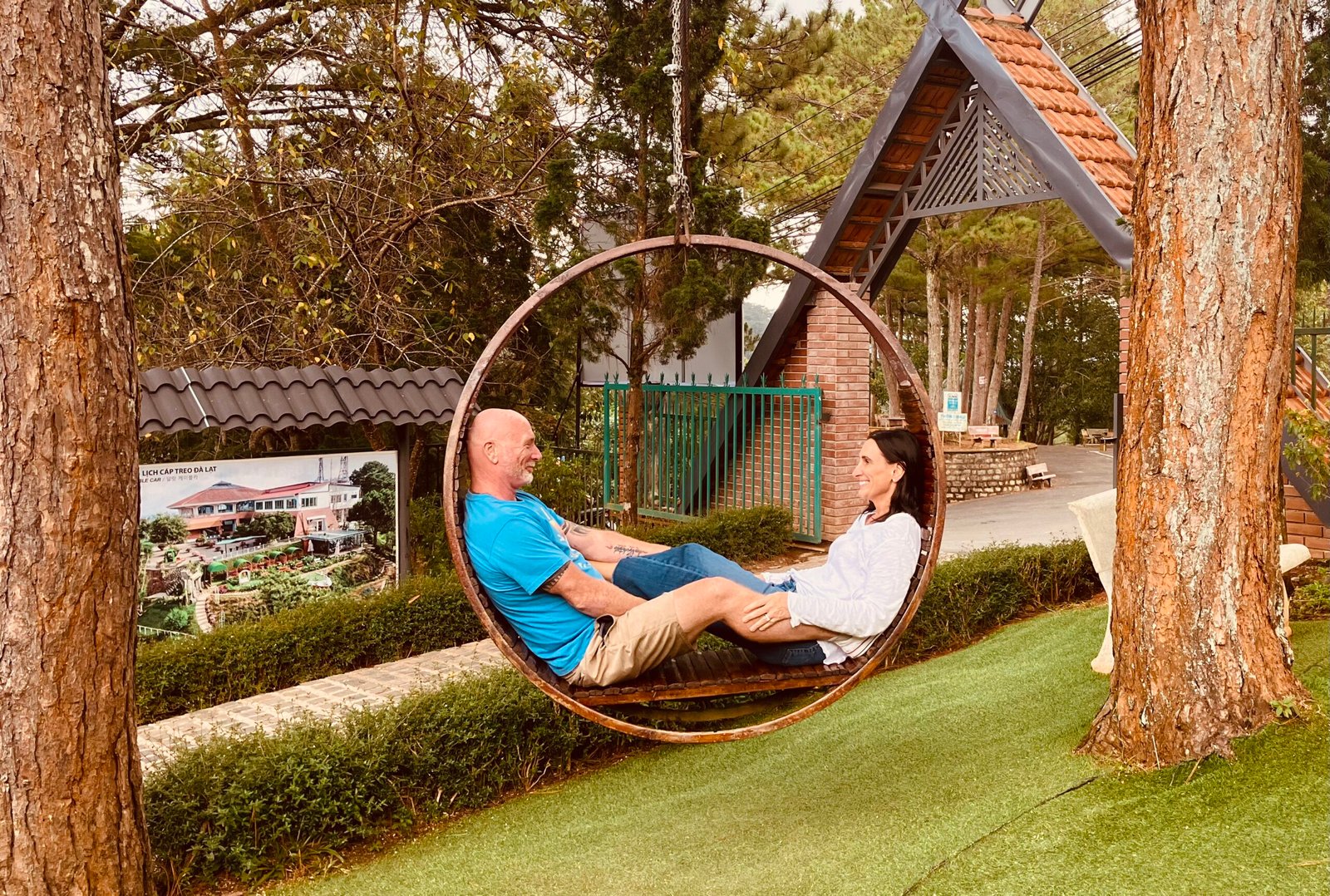
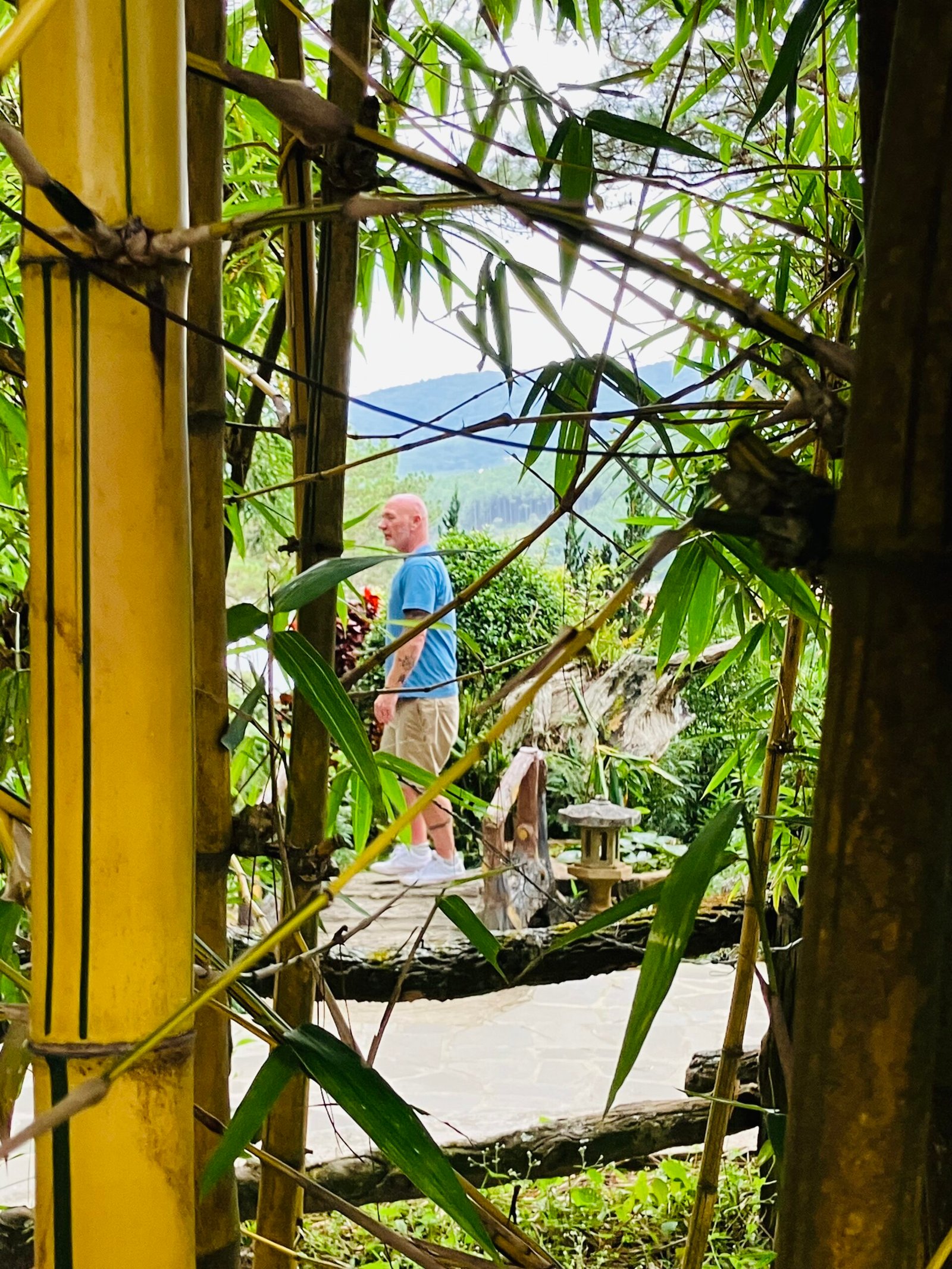
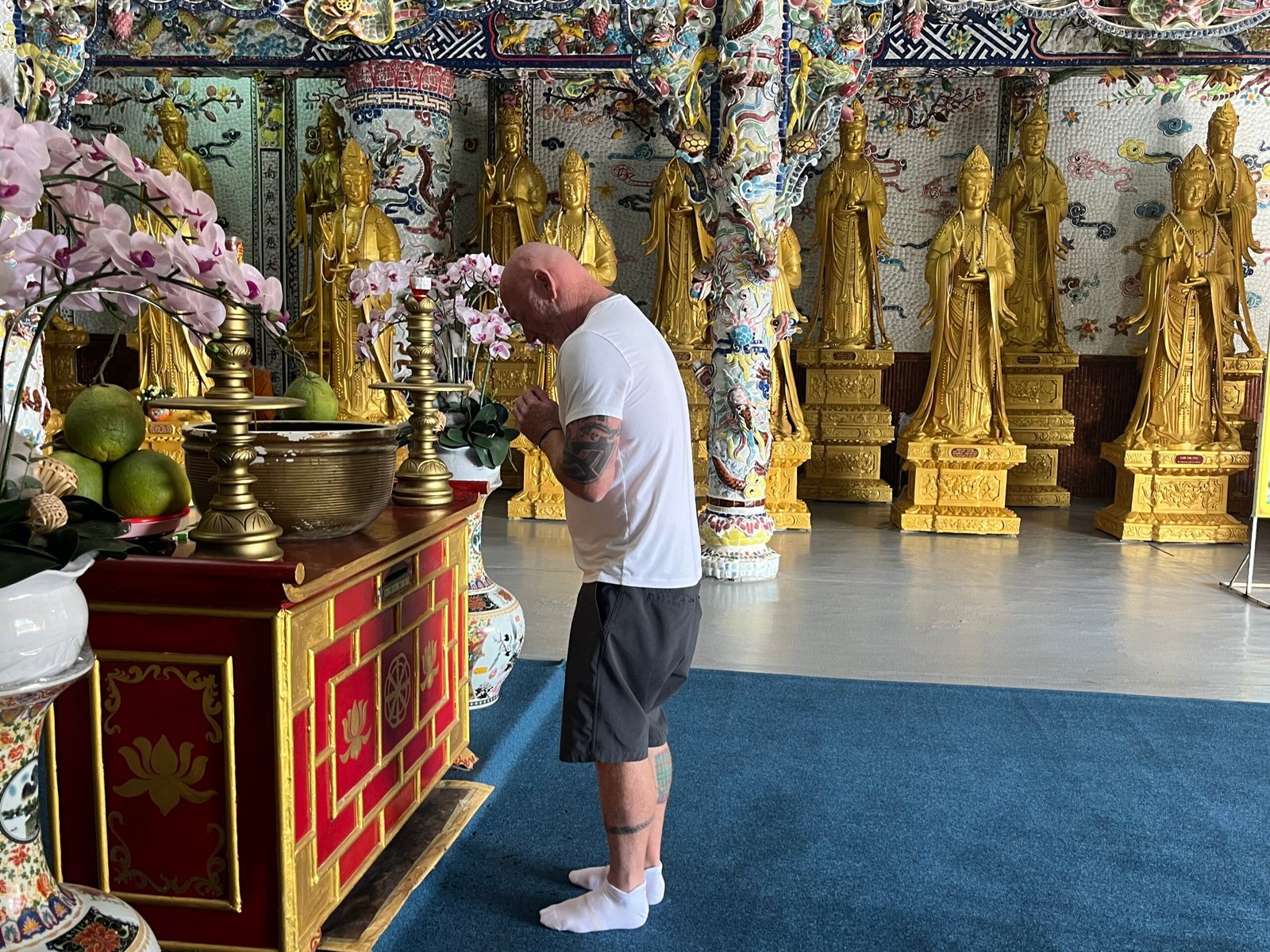
Da Lat surprised us completely. Cooler air. Winding mountain roads. Monasteries tucked into the hills. The Crazy House felt like stepping into a dream no one bothered to explain—staircases leading nowhere, animal sculptures, angles that made no sense and somehow all the sense at once. And then, unexpectedly, mountain coasters. Racing downhill through pine trees, laughing like kids, trying to reconcile how this place existed in the same country as the Mekong Delta. Da Lat was a reminder that Vietnam refuses to be categorized.
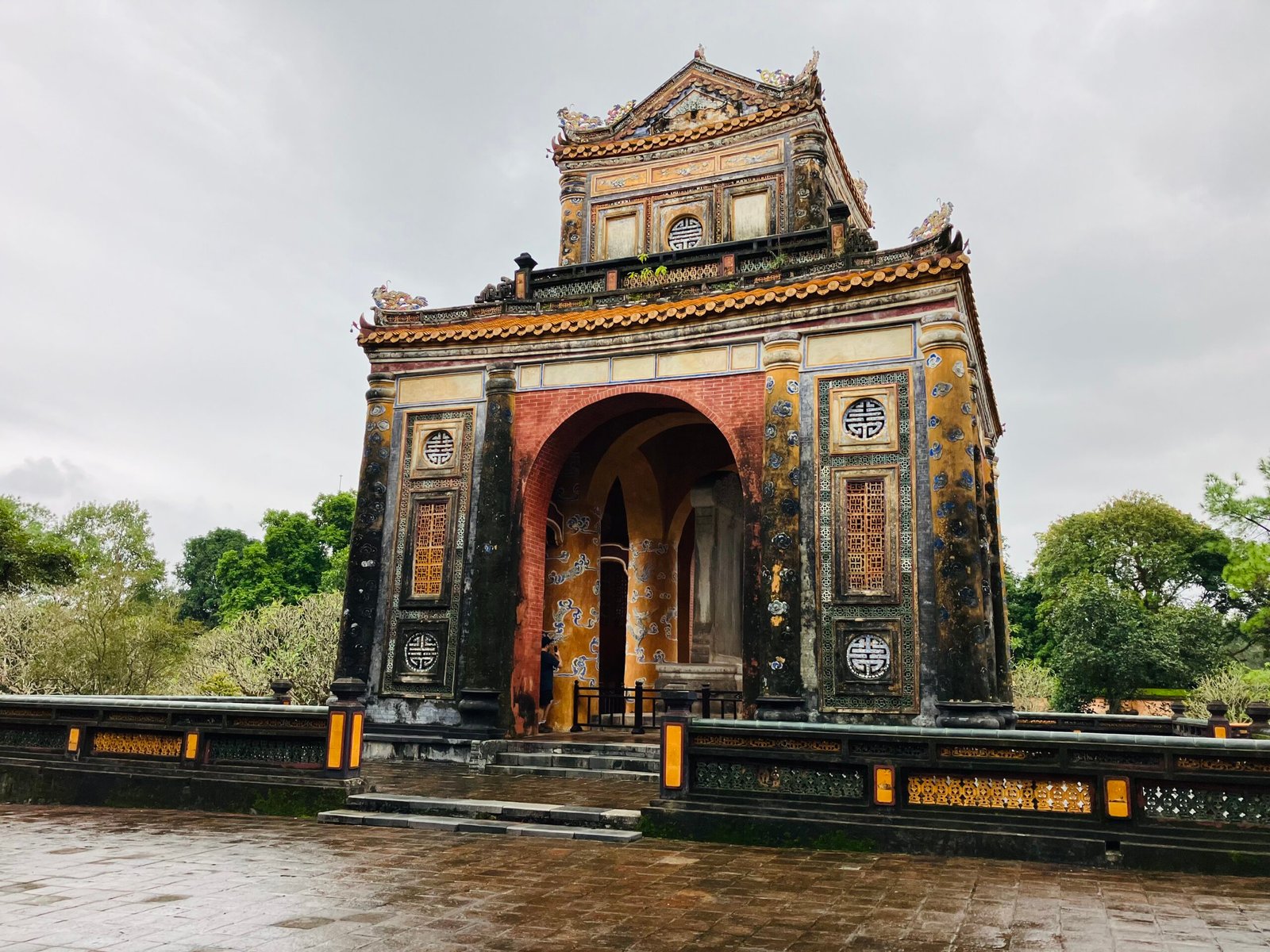
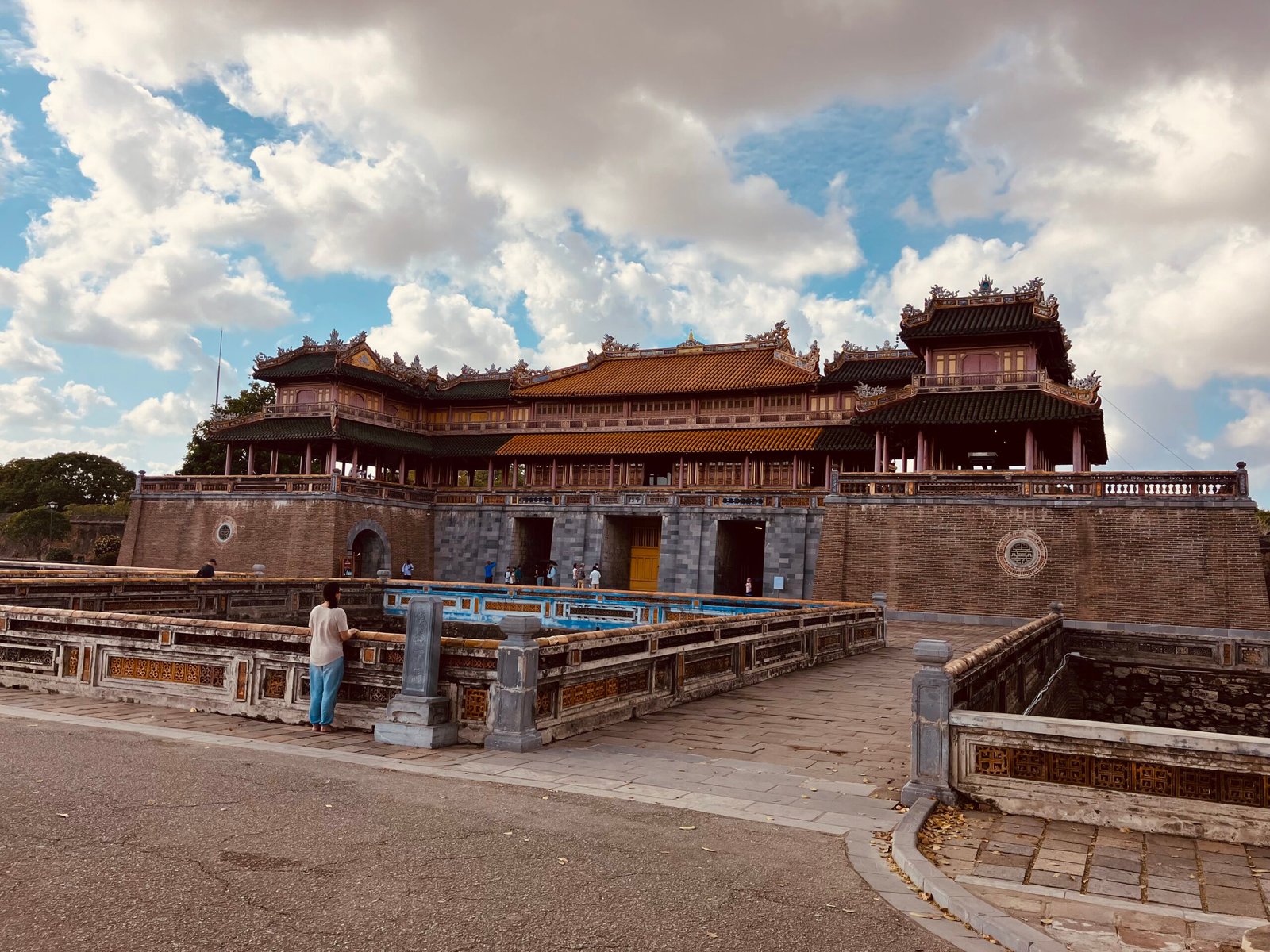
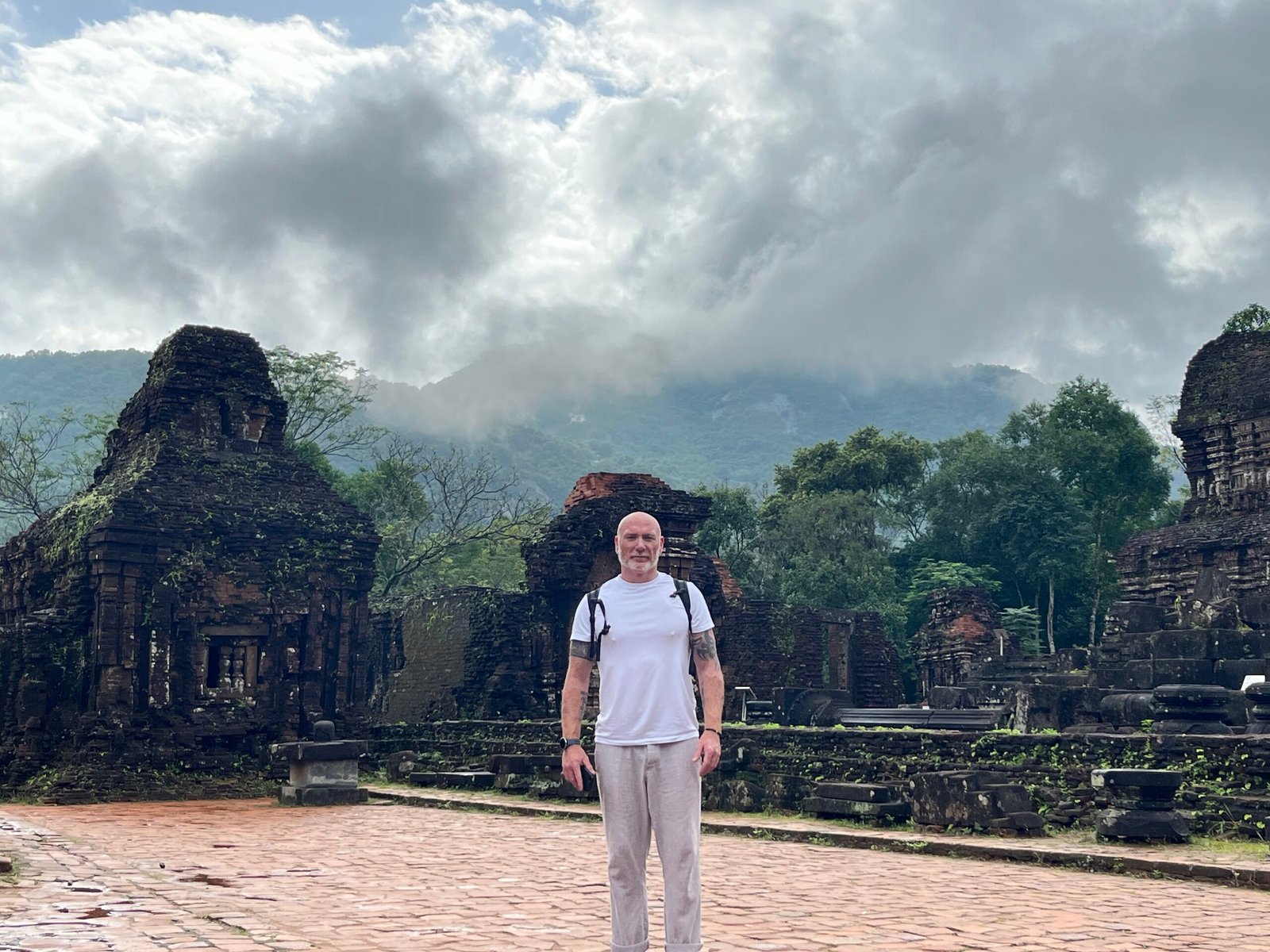
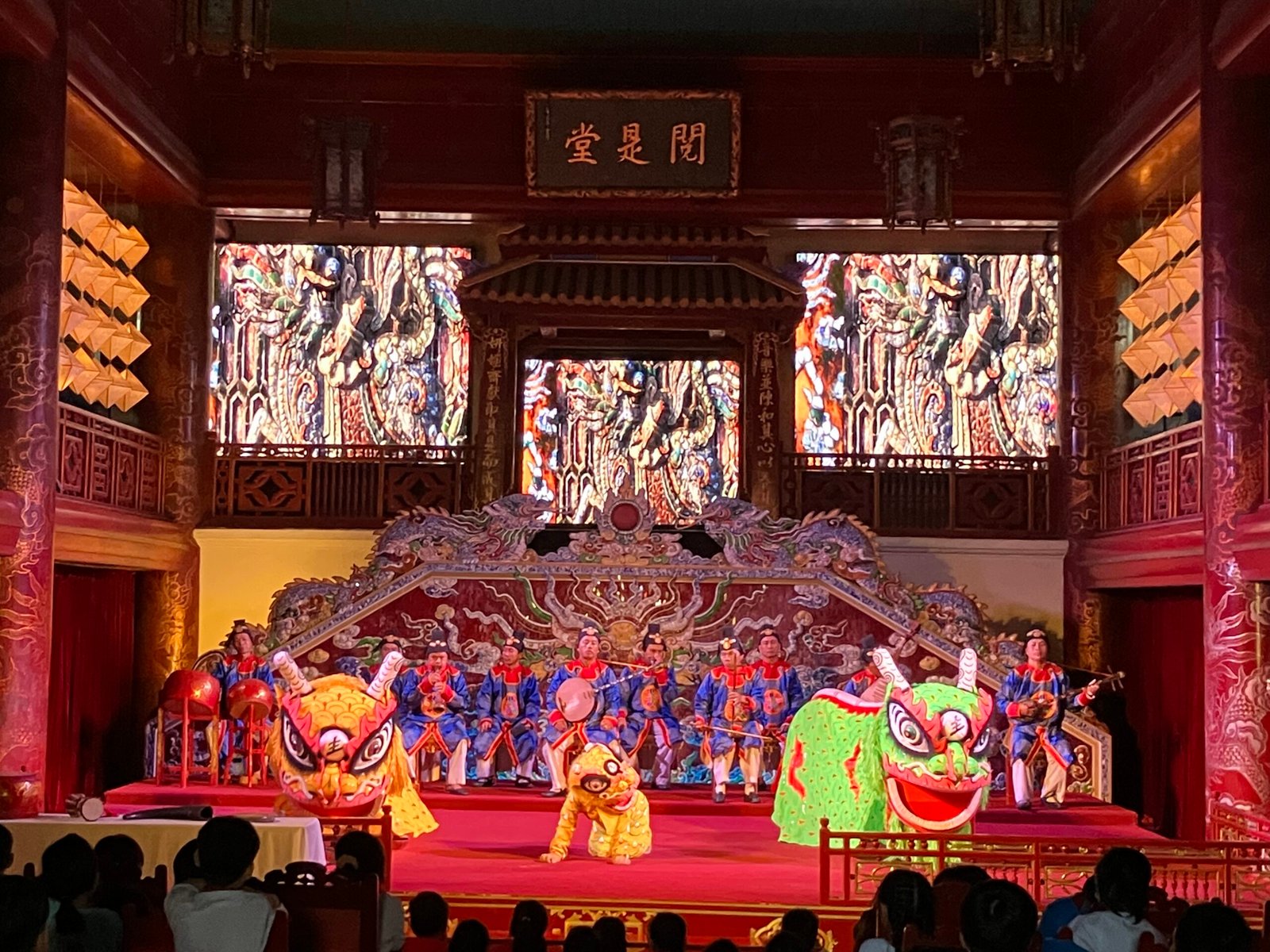
Hue brought gravity. Imperial cities. Royal tombs. Food that carried the weight of class, ceremony, and survival. Meals weren’t simply meals—they were lessons. Every dish arrived with context, history, and pride.
Hanoi reintroduced movement. Tight streets. Strong coffee. Conversations layered with politics, art, and resilience. Performances like Hat Xam—nearly lost to history—felt intimate and fragile, as if we were being trusted with something rare. That quiet reverence was balanced later by the joy of the Thang Long Water Puppet Theatre—playful, communal, and unmistakably Hanoi.
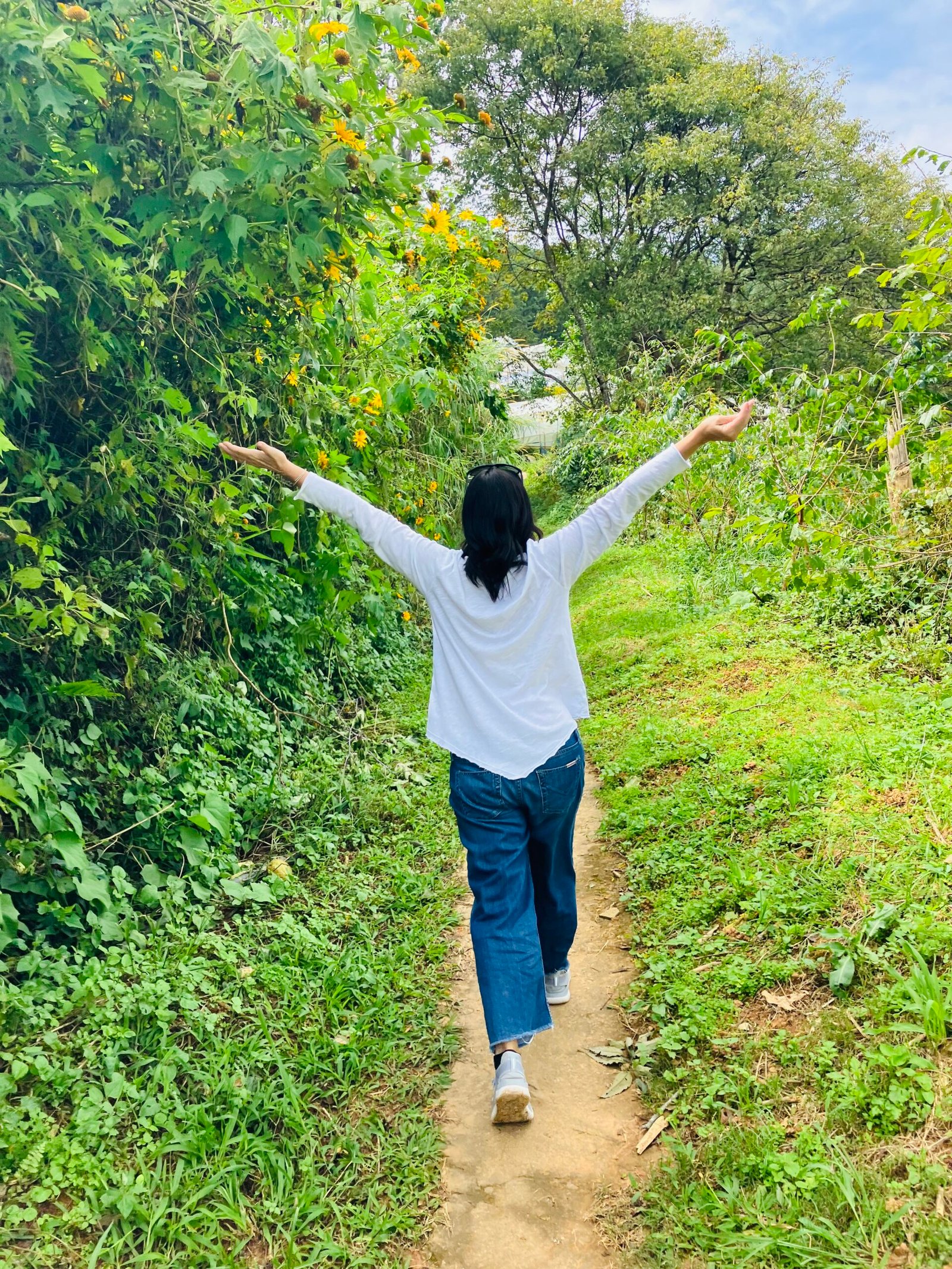
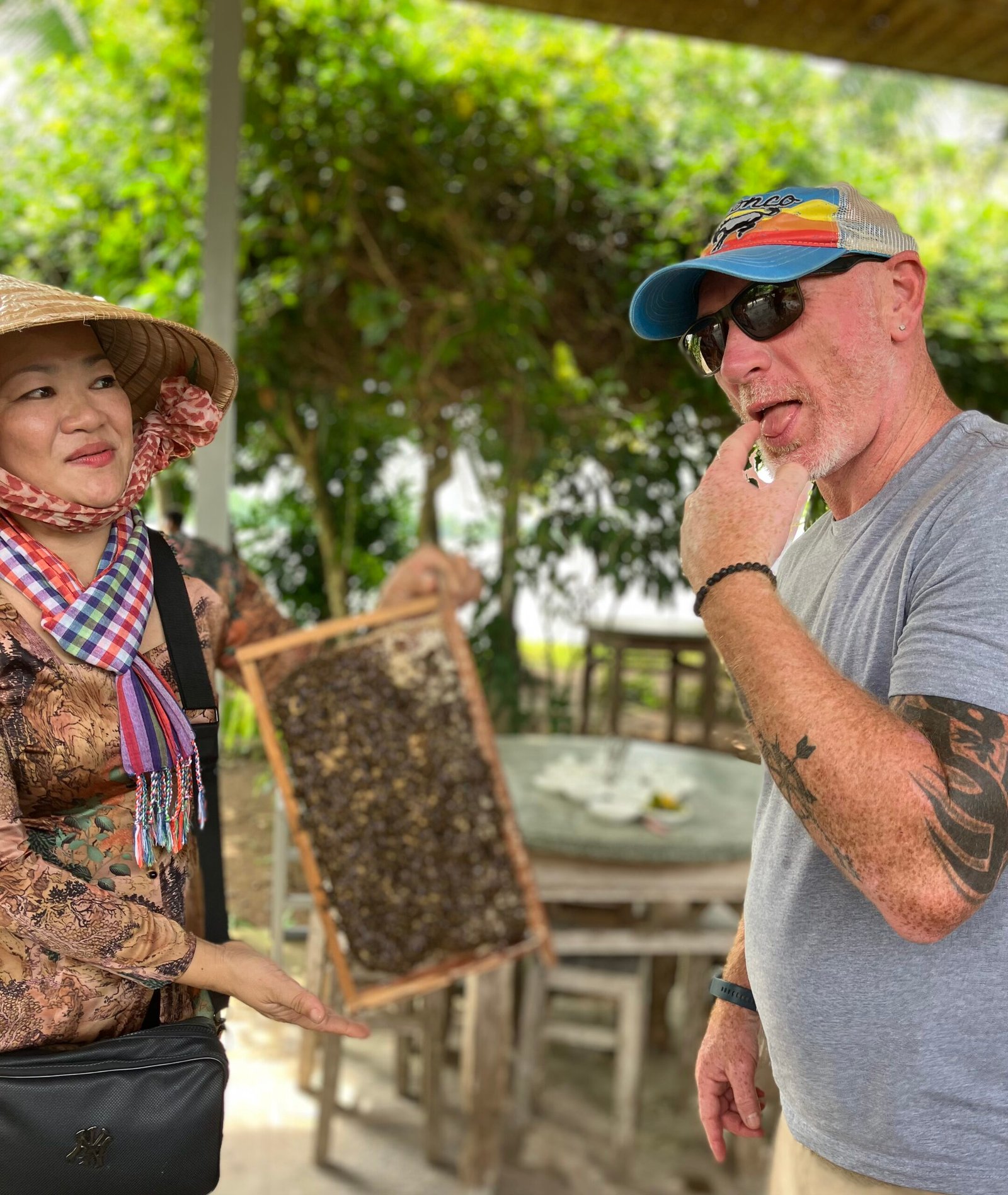
Mai Chau was the exhale we didn’t know we needed. Rice fields stretched outward. Village walks replaced itineraries. Meals shared with local families blurred the line between guest and friend. The quiet here felt intentional—earned, not accidental.
And then Halong Bay.
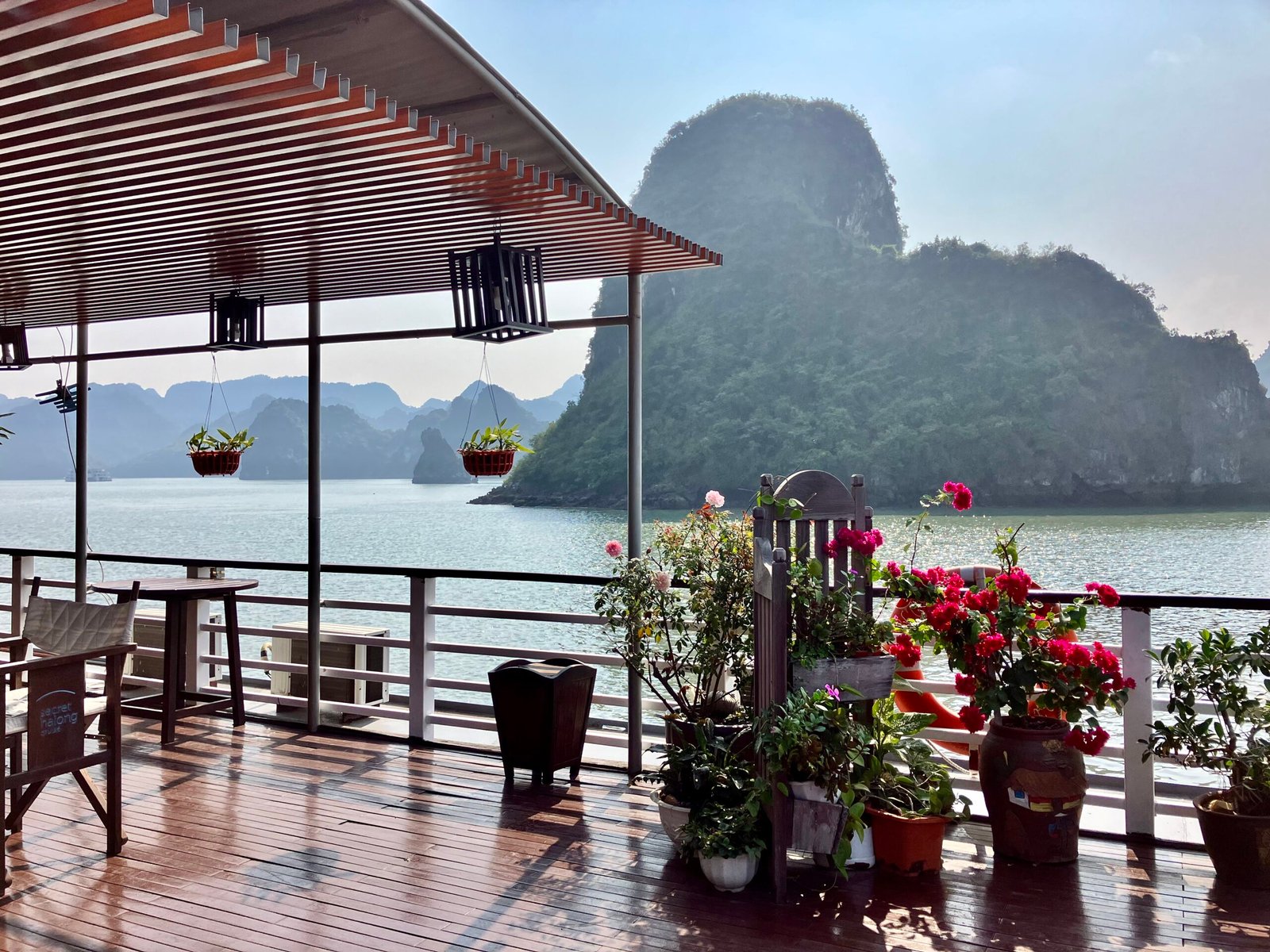
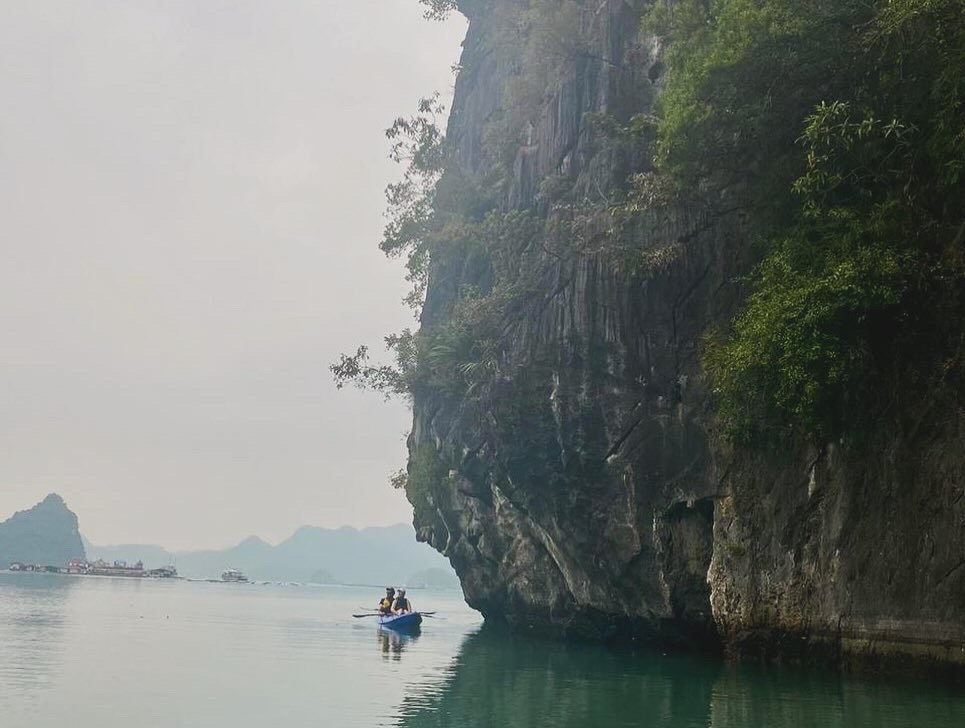
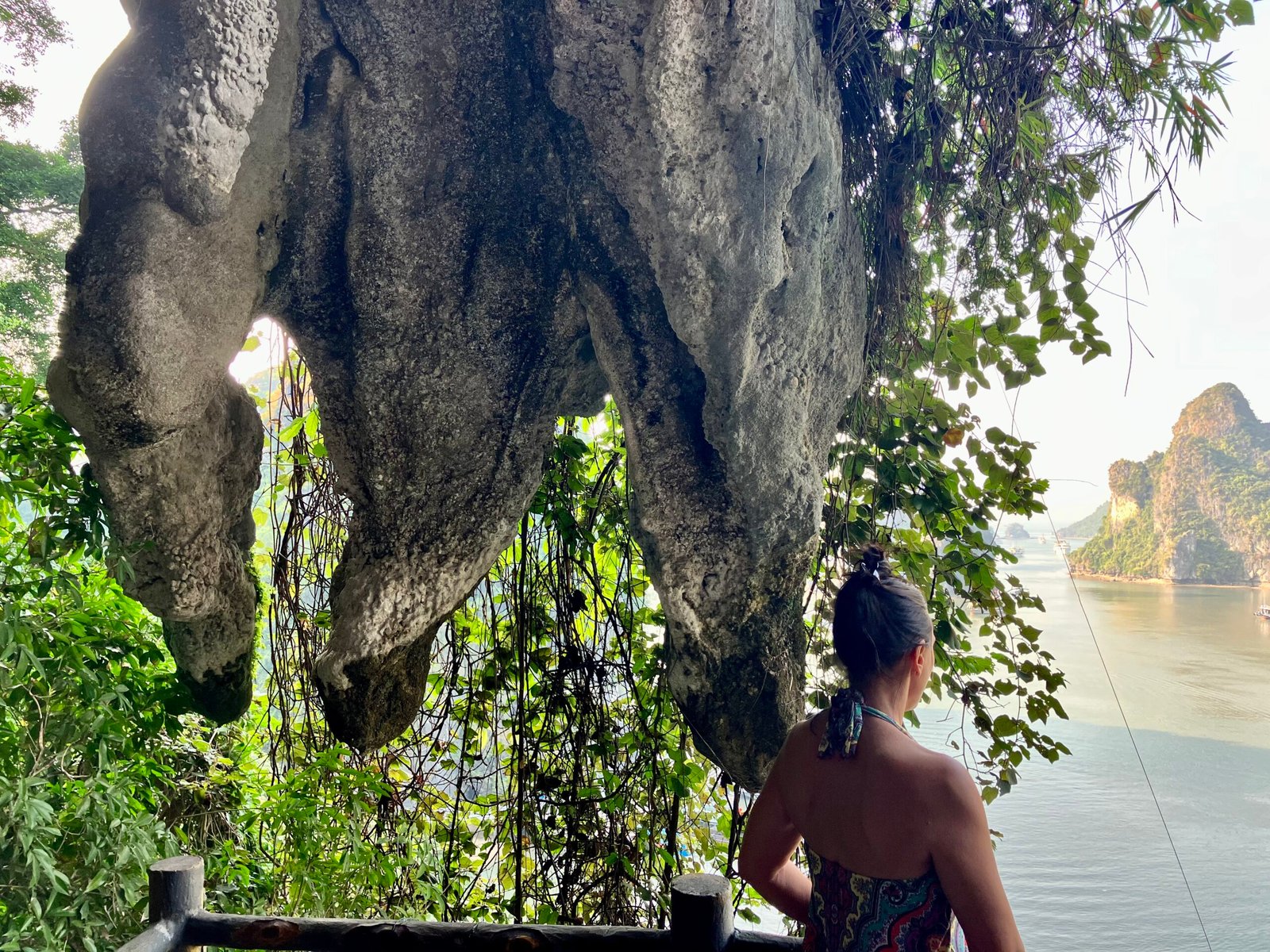
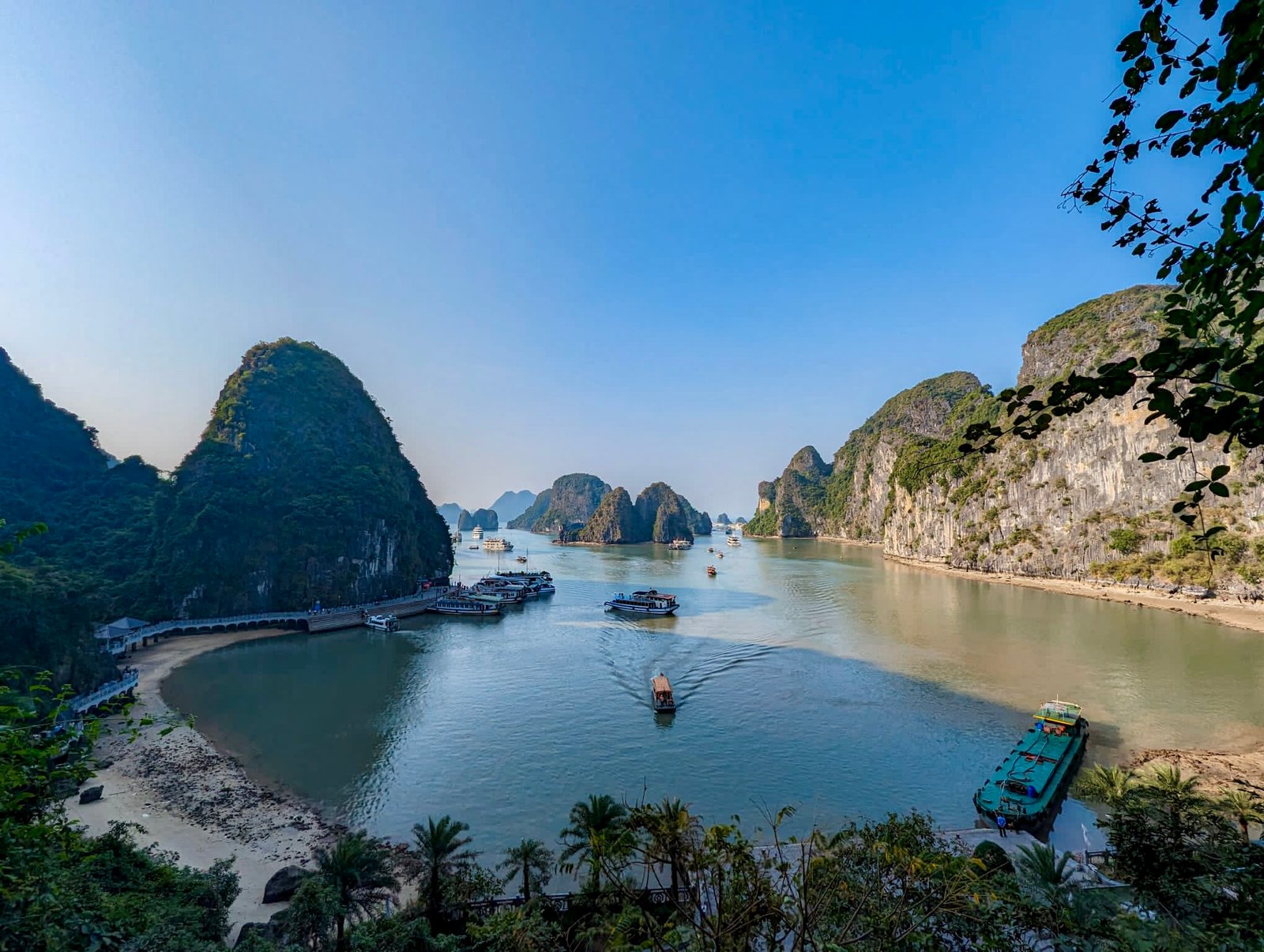
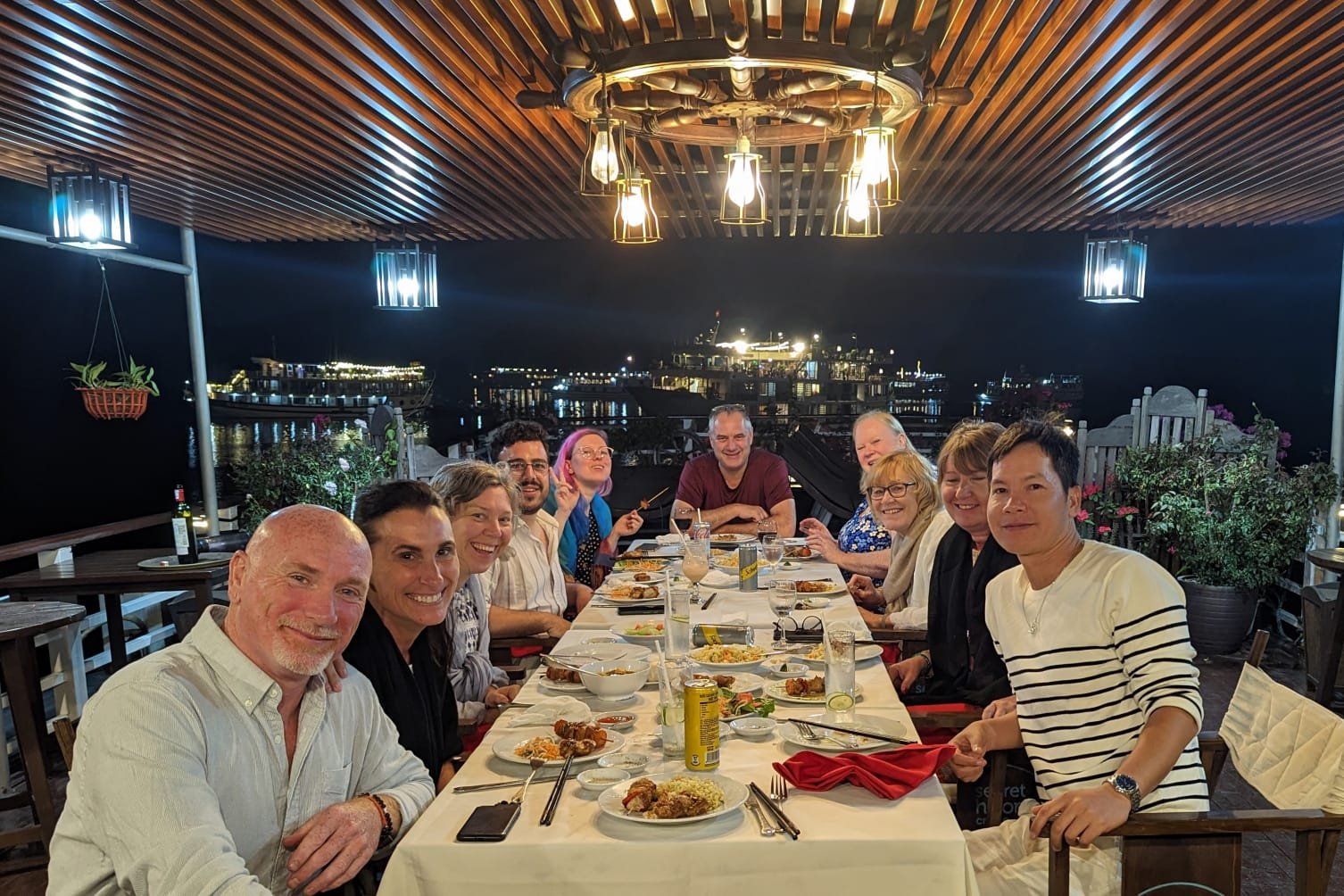
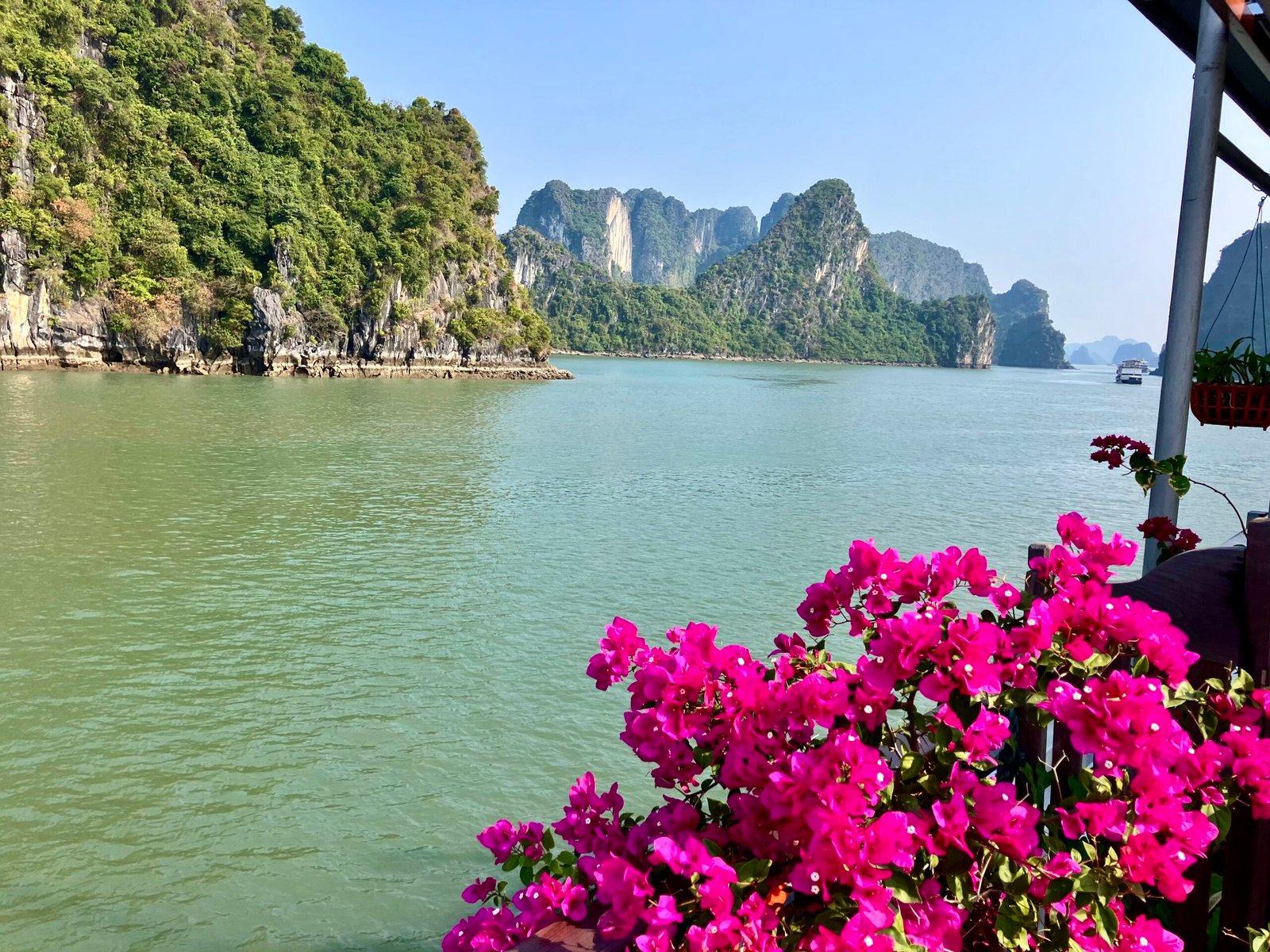
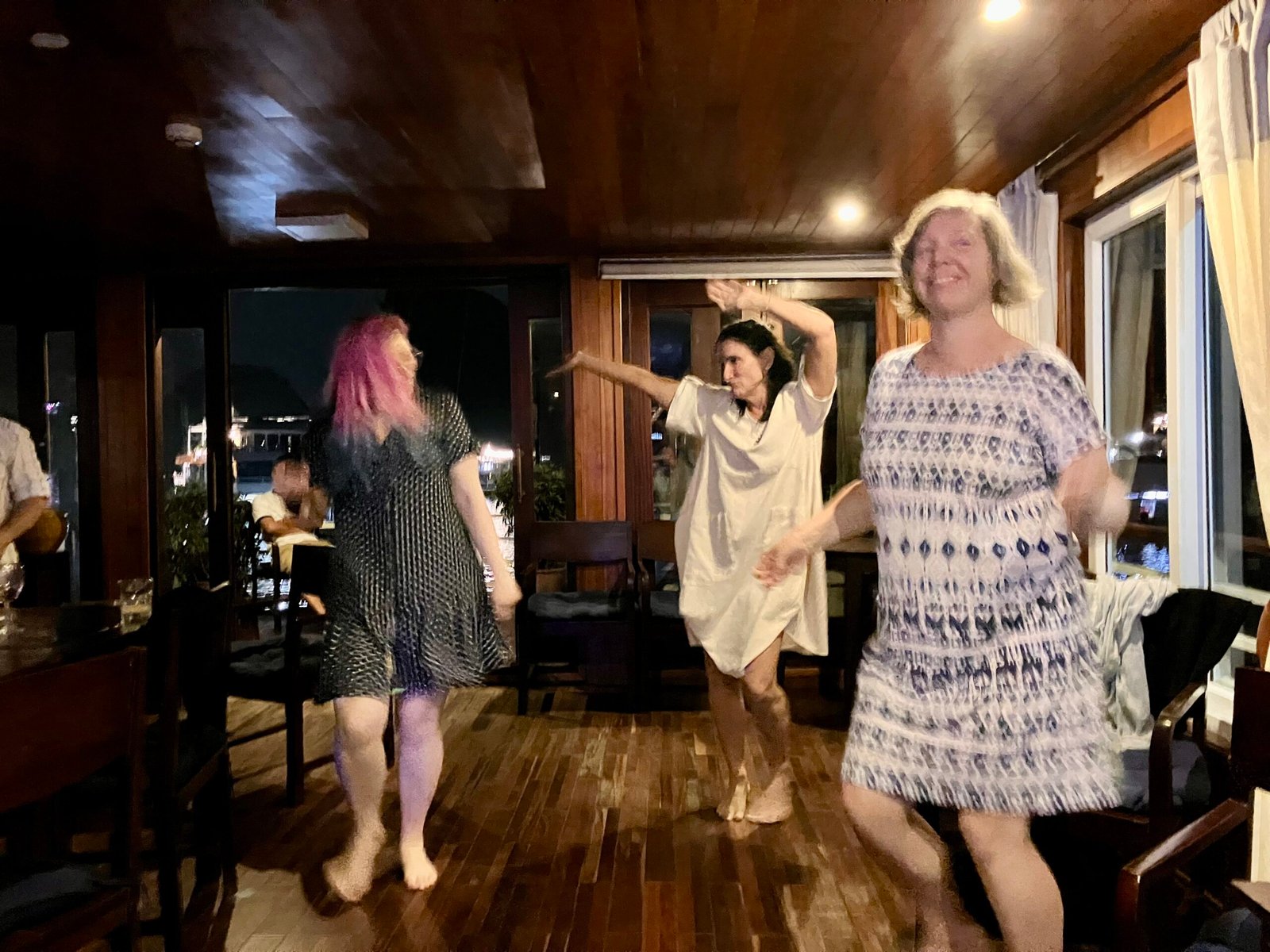
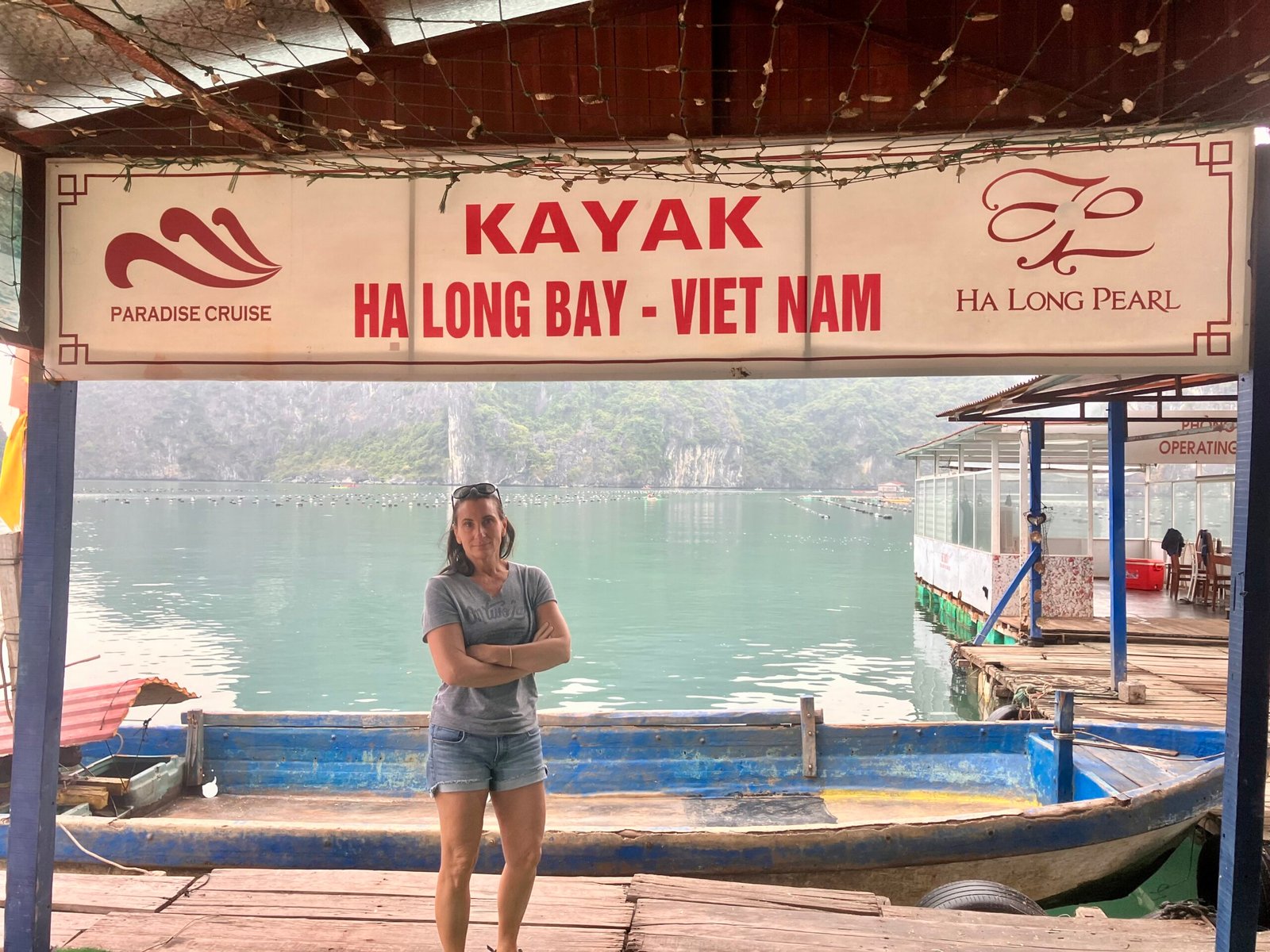
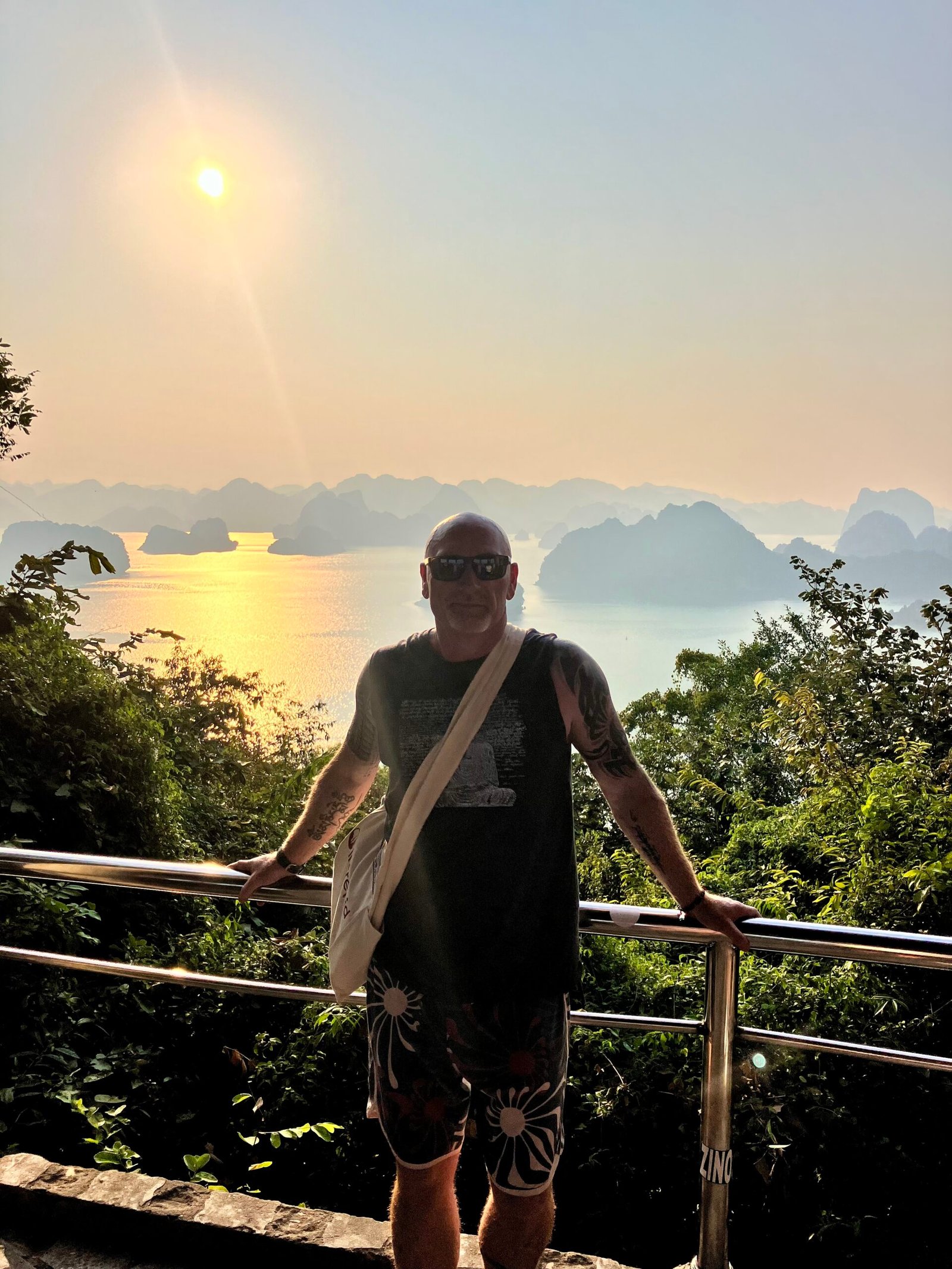
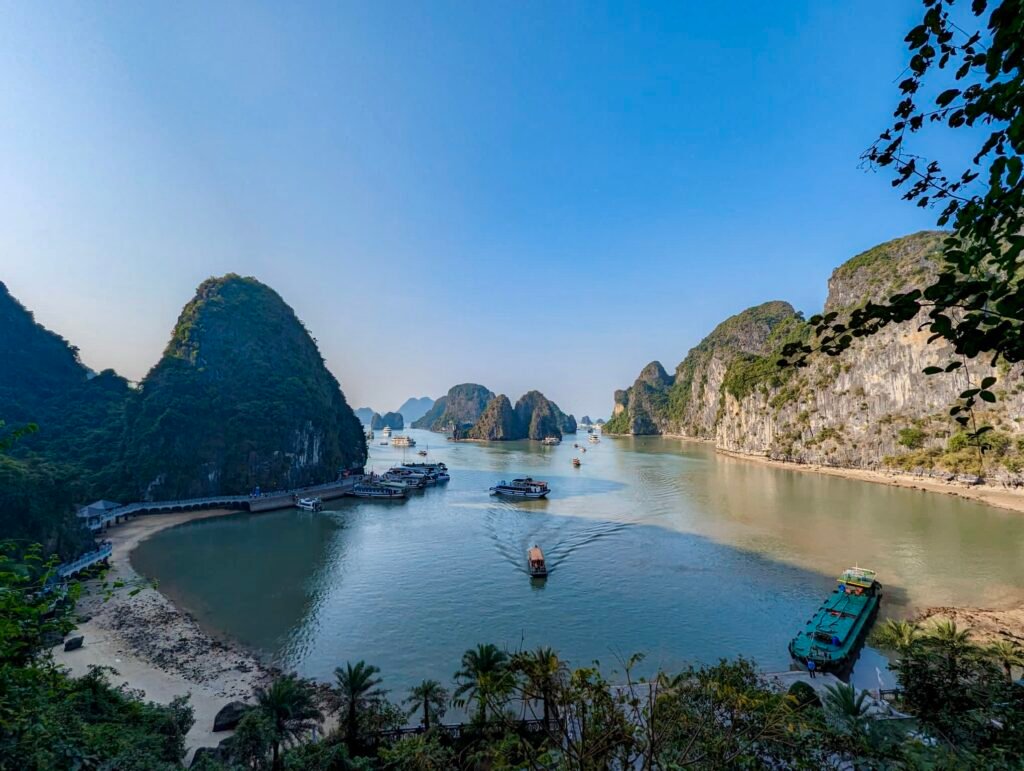
Limestone karsts rose out of still water like something imagined rather than built. An overnight boat became home. Sunset dinners on deck. Morning light cutting through mist. And later—karaoke. Loud, joyful, completely unplanned. Voices echoing across the water, laughter spilling into the night. Imperfect. Human. Unforgettable.
Travel doesn’t get better than that.
What Surprised Me
How quickly Vietnam stopped feeling foreign—and started feeling familiar.
How places like the Cu Chi Tunnels landed differently as a veteran. Crawling through those narrow spaces, listening to a war veteran describe life underground—tactics, survival, fear—it wasn’t abstract history. It was personal. Respect replaced curiosity. Silence replaced commentary. Some places don’t ask for words.
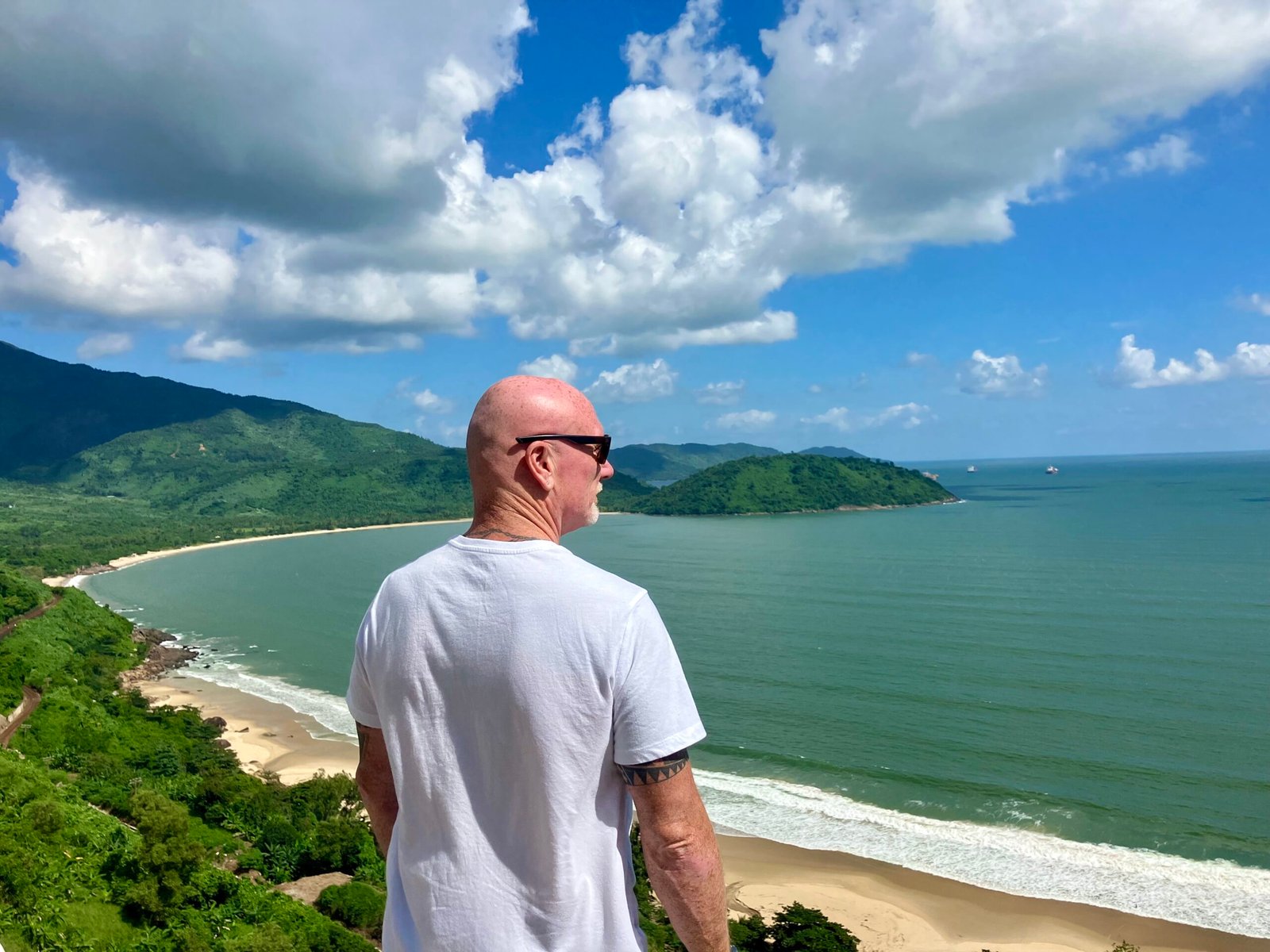
How wildly different one country can be without ever feeling fragmented. River deltas and lantern-lit towns. Mountain monasteries and imperial cities. Chaotic capitals and quiet villages. All connected. All unmistakably Vietnam.
How food stopped being “meals” and became memory. Specific bowls. Specific streets. Moments you know you’ll crave later—not just for the taste, but for who you were with and where you were when you ate them.
How the quiet moments lingered longer than the highlights. Sitting on a boat with nowhere to be. Walking without a plan. Sharing meals with strangers who felt like friends by the end of the night.
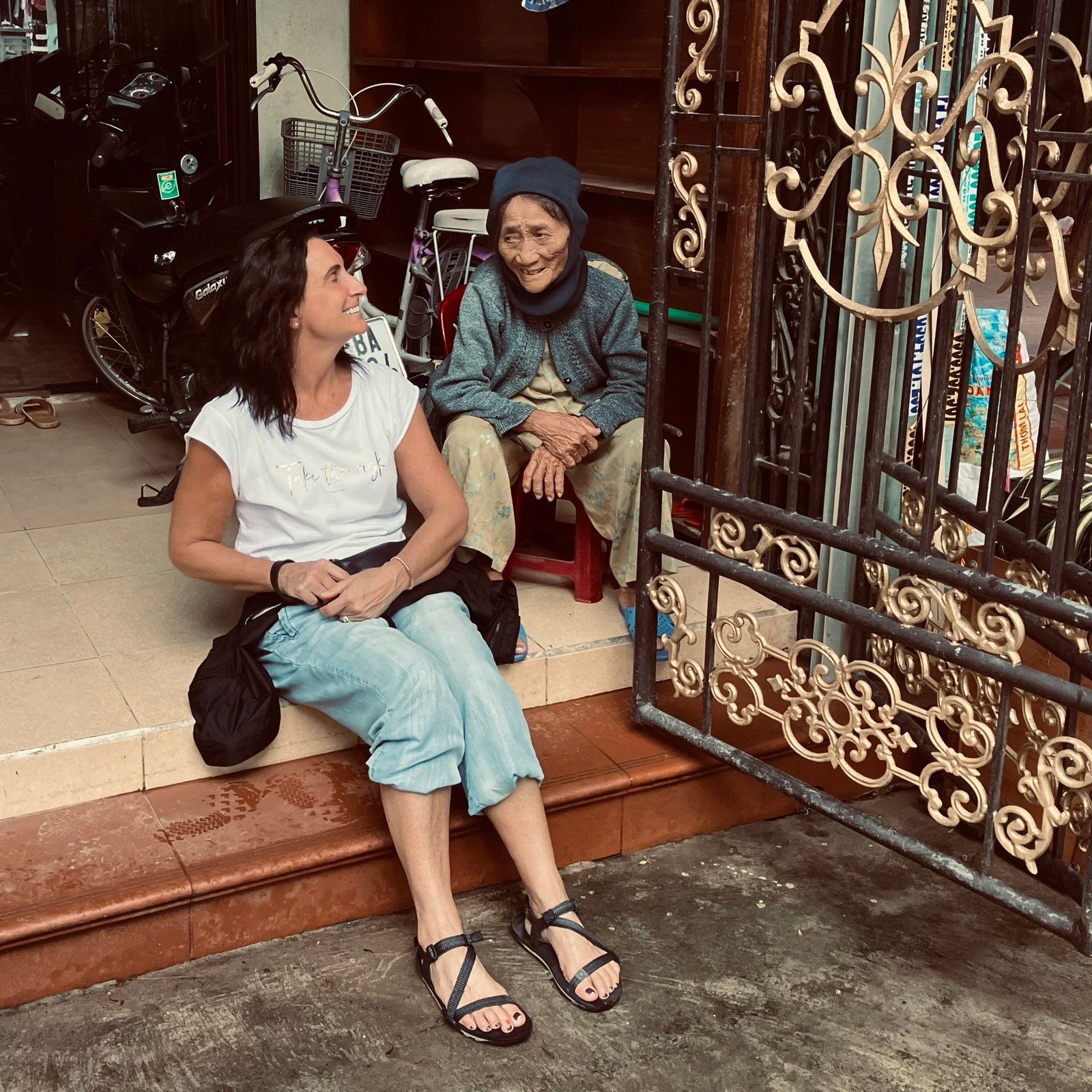
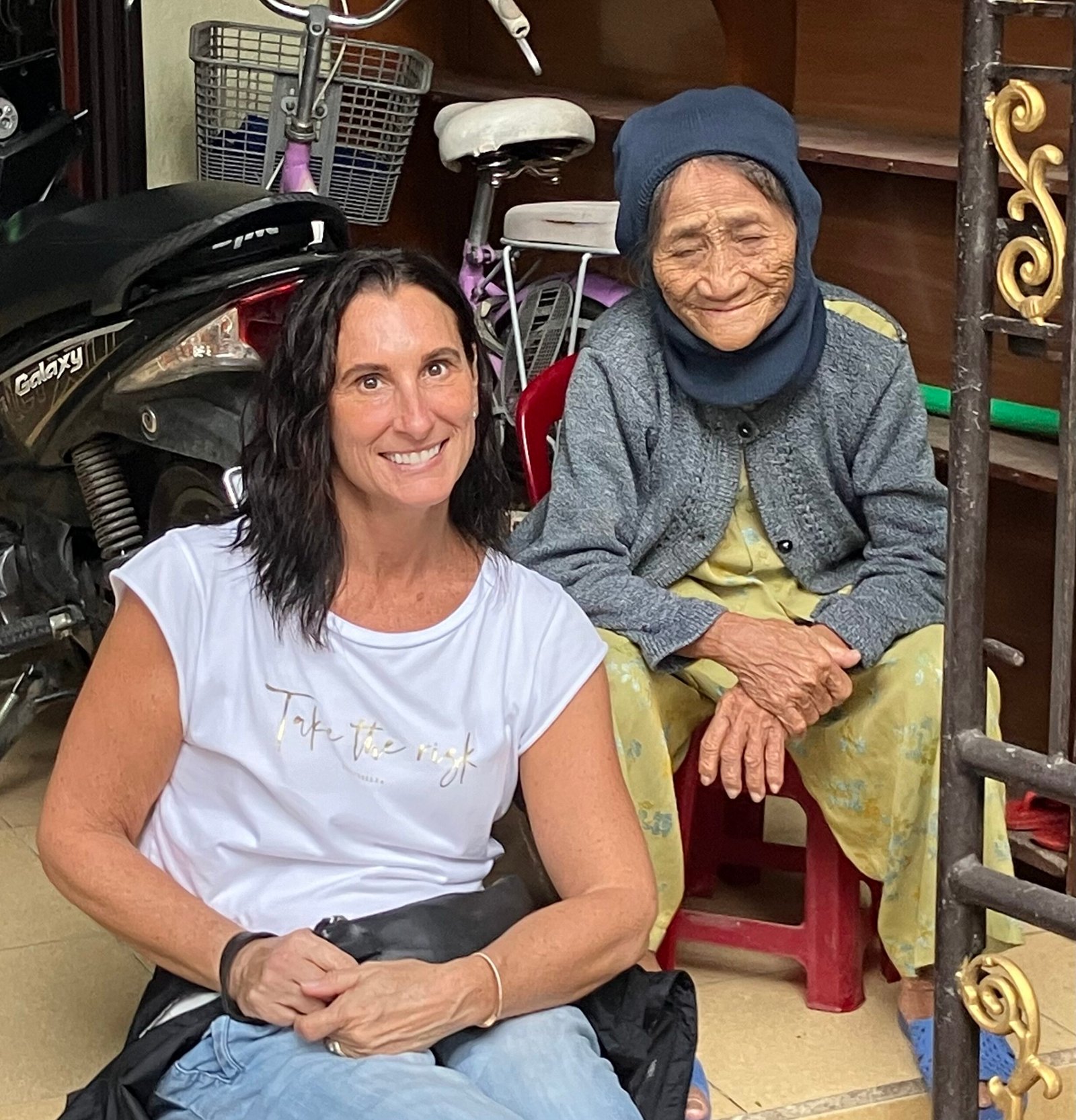
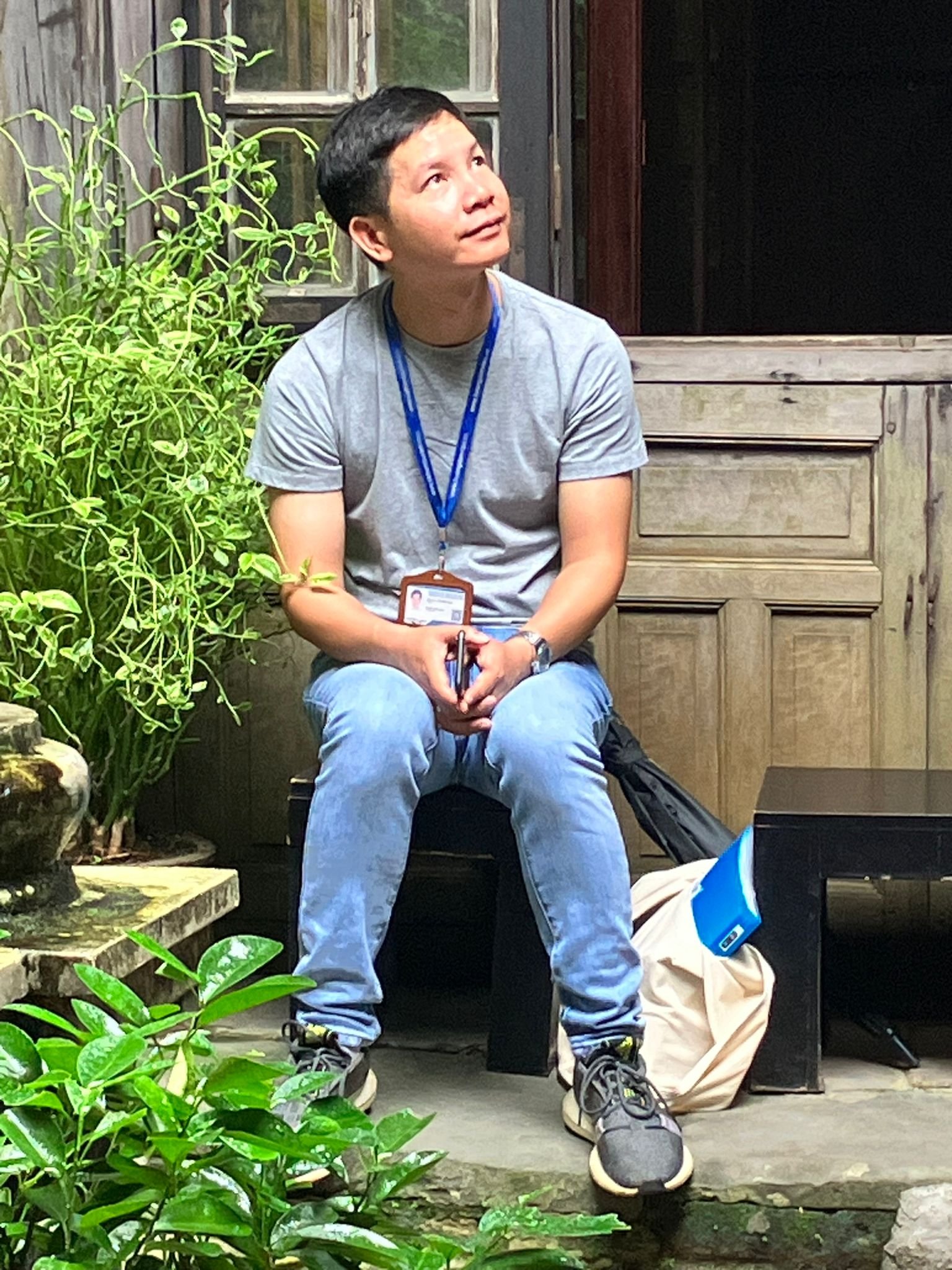
And the kindness of our host, Tao—his humor, openness, and genuine love for his country and culture. The beauty of Vietnam isn’t only in its landscapes, traditions, or historic architecture. It lives in its people.
And how, after thirty-six hours of travel—planes, airports, exhaustion—I would do it all again without hesitation. Vietnam doesn’t reward comfort. It rewards openness.
Do’s & Don’ts
A few things I’d do again — and a few I wouldn’t.
- Arrive open, not armored. Vietnam reveals itself slowly and generously when you listen more than you speak.
- Eat at street level. Trust your guide, follow locals, and don’t overthink it. Some of the best meals aren’t planned.
- Learn history from the people who lived it. Museums inform. Conversations transform.
- Slow down when the opportunity presents itself. The moments you remember most won’t be the scheduled highlights.
- Hold space for the past. Some places—like the Cu Chi Tunnels—ask for quiet and presence, not commentary.
- Rush Vietnam. Even with an itinerary, it rewards patience.
- Treat it like a checklist. You won’t “see it all,” and that’s the point.
- Assume one city represents the whole country. Each stop is its own world.
- Underestimate the heat, humidity, or travel days. Build in rest.
- Miss the moment while chasing the photo.
Regrets & Lessons
Looking back, the clearest lesson Vietnam offered wasn’t about what we missed—it was about when we rushed.
Some places asked for more time than we gave them. Da Lat, especially, revealed itself slowly—cooler air, winding mountain roads, monasteries tucked into hillsides, moments that felt like they were just beginning as we moved on. Hoi An, too, deserved more unstructured days. Not more sights—more stillness. More mornings without direction. More nights where lantern light replaced schedules.
Other stops made it clear, sooner, when it was time to keep moving. That wasn’t a failure—it was part of learning how to listen. Vietnam doesn’t demand equal time everywhere. Some places open quickly and completely. Others ask for patience. Knowing the difference matters.
Exhaustion also taught its own lesson. After long travel days, we occasionally chose rest over connection—skipped evenings where conversation, food, or laughter was waiting just outside the door. Understandable, but noticeable in hindsight. Vietnam rewards showing up, even when you’re tired.
We also learned how quickly moments fade if you don’t mark them. Not journaling nightly meant small details slipped away—specific conversations, street corners, flavors that deserved to be remembered more clearly.
And then there was curiosity. The Golden Bridge in Ba Na Hills sat just close enough to reach, just far enough to feel optional. We chose not to go. Not a major regret—but a reminder that sometimes the edge of effort is where the most unexpected moments live.
Vietnam didn’t punish these missteps. It absorbed them. It taught us that presence is finite, that time moves unevenly, and that the most meaningful travel isn’t about maximizing experiences—it’s about honoring the ones you’re already in.
Final Thoughts
Vietnam didn’t feel like a trip. It felt like a conversation—one that unfolded over time, layered with history, humor, resilience, and generosity, never rushed and never one-sided.
After thirty-six hours of travel, I expected to be drained. Instead, something else happened. Fatigue gave way to attention. The unfamiliar became grounding. What should have felt overwhelming felt clarifying. Vietnam has a way of meeting you where you are and quietly asking you to be more present than you planned to be.
This journey wasn’t about collecting places or highlights. It was about learning how to move through a country that carries its past openly and its people generously. About understanding when to speak and when to listen. When to slow down. When to simply accept what’s offered.
Vietnam doesn’t reward comfort.
It rewards curiosity.
It rewards humility.
And if you let it, it teaches you how to stay open long after you’ve left.